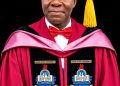
























The Deputy Vice-Chancellor (Academic) of the Federal University of Agriculture, Abeokuta (FUNAAB), Prof. Olusegun Mark Obafemi Idowu, has called for increased investment in alternative animal feed resources as a sustainable strategy for enhancing Nigeria’s food security, reducing livestock production costs, and improving the nutritional quality of animal products.
Prof. Idowu made the call while delivering the University’s 114th Inaugural Lecture on Tuesday, titled, “Feed to Food: Biological Machines in the Hands of a Monogastric Nutritionist.”
The Professor of Monogastric Animal Nutrition said findings from his decades of research have shown that locally available, non-conventional feed resources can significantly reduce the cost of livestock production while improving animal performance and product quality.
According to him, his research established the nutritional and economic value of alternative feed ingredients such as cassava root sievate, shrimp waste, and unpeeled cassava root meal, noting that these materials reduce dependence on conventional feed ingredients that often compete directly with human food needs.
He explained that the alternative feed resources improve feed conversion efficiency and offer a practical solution to the rising cost of animal production in Nigeria.
Prof. Idowu also revealed that one of the major breakthroughs from his research was the successful reduction of cholesterol levels in poultry products through dietary manipulation.
He said incorporating alternative feed ingredients into poultry diets significantly lowered cholesterol concentrations in eggs, blood plasma, and liver tissues, while dietary copper supplementation enhanced cholesterol excretion. According to him, the combined use of copper and ascorbic acid reduced cholesterol without leaving excessive copper residues in chicken muscles.
Describing animal nutrition as a vital link between feed production and national food security, the don stressed that sustainable feeding strategies improve livestock productivity, promote animal welfare, enhance environmental sustainability, and provide healthier food for consumers.
He urged governments, researchers, feed manufacturers, farmers, and other stakeholders to invest in the production and processing of alternative feed resources, intensify research into agro-industrial by-products and non-conventional feed ingredients, strengthen collaboration across the livestock value chain, and prioritise continuous professional development for animal nutritionists.
According to him, embracing innovative feeding strategies would improve the efficiency and competitiveness of Nigeria’s livestock industry while making nutritious animal protein more affordable and accessible to the country’s growing population.
Earlier, the Vice-Chancellor of FUNAAB, Prof. Babatunde Kehinde, described the 114th Inaugural Lecture as another milestone in the University’s commitment to research-driven solutions to national development challenges.
He noted that the lecture was the fourth inaugural lecture from the Department of Animal Nutrition and the 14th from the College of Animal Science and Livestock Production (COLANIM).
Presenting the lecturer’s profile, Prof. Kehinde described Prof. Idowu as a distinguished scholar who obtained all his academic qualifications from FUNAAB, earning a Bachelor of Agriculture degree in Animal Nutrition in 1994, a Master’s degree in 1999, and a Ph.D. in Monogastric Animal Nutrition in 2004.
He noted that Prof. Idowu joined the University’s service as a Graduate Assistant in 1997 and became a Professor in 2014, having held several strategic positions, including Acting Head of the Department of Animal Nutrition, Chairman of the University Timetable and Examination Committee (TIMTEC), Director of the Distance Learning Centre, Director of the Institute of Food Security, Environmental Resources and Agricultural Research (IFSERAR), and currently Deputy Vice-Chancellor (Academic).
The Vice-Chancellor further disclosed that the inaugural lecturer has authored more than 70 journal articles and over 20 conference papers, while attracting several national and international research grants from organisations including TETFund, DelPHE, the EDULINK ACP-EU Cooperation Programme, and the West African Network of Organic Agriculture and Research and Training (WANOART).