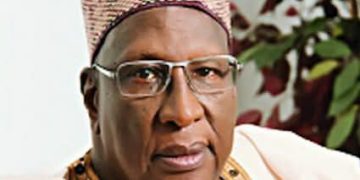




















Nigerian technology entrepreneur and corporate leader, Dr. Adebola Ismail Akindele, has hailed Lagos State’s sustained development trajectory since Nigeria’s return to democracy in 1999, attributing the progress to continuity in governance and the consistent execution of projects by successive administrations.
Akindele, Chairman and Group Chief Executive Officer of Courteville Business Solutions Limited, made the assertion on Monday while delivering the keynote lecture at the 4th Faculty of Social Sciences Open Lecture of Olabisi Onabanjo University (OOU), Ago-Iwoye, Ogun State.
The lecture, themed “Politics and Governance in Nigeria: The Leadership Question,” was held at the OGD Hall on the university campus and attracted academics, students, policymakers and other stakeholders interested in Nigeria’s political future.
Emphasising the importance of policy continuity, Akindele pointed to Lagos State’s rail transportation projects, metro line development and infrastructure expansion as clear examples of how sustained commitment to long-term goals can accelerate growth and development.
According to him, the steady progress recorded in Lagos over the past 27 years has been driven largely by the ability of successive administrations to build on existing projects rather than abandon them.
The business leader cautioned against the culture of discontinuing projects initiated by previous administrations, describing the practice as a major setback to development.
Drawing reference from Ogun State, where some projects embarked upon by former governments were abandoned by succeeding administrations, Akindele stressed that governance should be driven by the public interest rather than partisan considerations.
He argued that Nigeria must develop home-grown solutions to its governance and leadership challenges rather than rely solely on models imported from other countries.
“Over the years, it has been discovered that what works in other places does not always work when tested in Nigeria. We must develop solutions that take cognisance of our peculiar challenges in order to move forward,” he said.
Akindele described leadership as a responsibility centred on service and the collective good, noting that true leaders initiate, direct and activate actions that serve the best interests of the people rather than personal ambitions.
“A leader must relegate personal interests to those of the people. Such a leader must build a team, understand the team and earn the followership of the people without coercion or self-interest,” he added.
Responding to questions from journalists on why Lagos appears to be functioning better than many other states, Akindele said: “We are aware of the plans they have shared for the future, and we pray to witness the achievements they hope to accomplish. A similar experience, we hope and pray, can be replicated across different states in Nigeria.”
“Sustainability and continuity are very key to growth and development. Whether it is the same political party or a different one, projects should not be abandoned or ignored. Projects should not be left uncompleted, whether by the same governor or a successor. That is how we hope to get to the point where Lagos State is today,” he added.
Earlier, the Vice-Chancellor, Prof. Ayodeji Agboola, reiterated the university’s commitment to producing graduates who are knowledgeable, skilled and capable of adding value to society.
He said OOU had integrated entrepreneurship components into its academic programmes and introduced short courses aimed at equipping students with practical skills needed to thrive in a rapidly changing world.
Agboola commended the Dean of the Faculty of Social Sciences, Prof. Dele Odunlami, for bringing a distinguished business leader to engage with students and academics, noting that collaboration between universities and industry is essential for producing graduates who meet contemporary societal and economic needs.
The Vice-Chancellor also paid tribute to the late Awujale of Ijebuland, Oba Sikiru Kayode Adetona, recalling the monarch’s immense contributions to the institution through his support for educational development and infrastructure projects.
“We want to bridge the gap between the gown and the town, between academia and industry. Education must not remain theoretical; it must respond to the needs of society and the economy,” Agboola said.
Also speaking, the Dean of the Faculty of Social Sciences, Prof. Dele Odunlami, described the institution’s Open Lecture Series as a vital platform for shaping public discourse and generating ideas for national development.
Odunlami noted that the lecture series had evolved into a flagship intellectual engagement connecting academia with society.
According to him, the Faculty of Social Sciences has deliberately sustained the Open Lecture initiative as a “town and gown” platform for the distillation of ideas capable of addressing pressing societal challenges and setting the agenda for transformation and development.
Highlighting the significance of the lecture theme, he observed that Nigeria is approaching another electoral cycle amid continued debates over leadership and followership, as well as the type of leadership model best suited to the country’s development.
He noted that discussions on governance often revolve around whether national progress depends more on visionary leaders or responsible followers, adding that such questions remain central to Nigeria’s democratic journey.