





















The Socio-Economic Rights and Accountability Project (SERAP) and the Nigerian Guild of Editors (NGE) have called on the government of President Bola Tinubu, Nigeria’s state governors, and the Minister of the Federal Capital Territory to urgently ensure press freedom, protect journalists, and bring an end to the escalating insecurity and widespread human rights violations across several parts of northern Nigeria, including Benue, Borno, Kwara, Plateau, and Sokoto states.
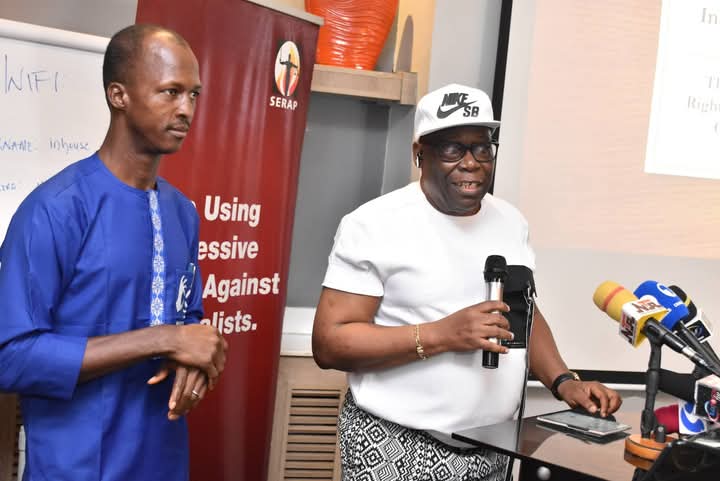
The statement followed the conference and interactive session on ‘the Role of the Media in Promoting People’s Rights, Accountability, and Access to Justice in the Context of Growing Insecurity in Nigeria’ held yesterday at the Radisson Blu Hotel in Ikeja. The event was jointly organized by SERAP and NGE to mark World Press Freedom Day.
In a joint statement today, SERAP and NGE emphasised that protecting journalists and safeguarding information integrity are central drivers of peace, security, and democratic stability.
The groups said, “any credible peace, recovery, or security strategy in Nigeria must integrate support for free, independent, and pluralistic media alongside humanitarian, institutional, and economic responses.”
The groups expressed “serious concerns about the scale and persistence of killings, abductions, sexual violence, forced displacement, and destruction of property across several parts of northern Nigeria.”
According to the groups, “thousands have reportedly been killed and millions displaced, with rural communities repeatedly targeted and women and children bearing the brunt of the violence and insecurity.”
The statement, read in part: “these patterns reflect systemic failures to prevent foreseeable harm, protect communities, investigate violations, prosecute perpetrators and their sponsors, and ensure access to justice and effective remedies for victims.”
“Such grave violations constitute serious breaches of Nigeria’s obligations under the Nigerian Constitution 1999 (as amended), the African Charter on Human and Peoples’ Rights, and the International Covenant on Civil and Political Rights to which Nigeria is a state party.”
“The humanitarian consequences remain severe: communities destroyed, livelihoods lost, and victims left without effective remedies. The persistence of impunity continues to erode public trust and weaken democratic governance.”
“Nigerian authorities at all levels have binding constitutional and international human rights obligations to protect journalists, and end insecurity and impunity in the country.”
“The Tinubu administration, state governors, FCT minister and other relevant authorities must exercise due diligence to prevent, investigate, and remedy human rights violations, including by ensuring justice for victims and accountability for perpetrators and their sponsors.”