



















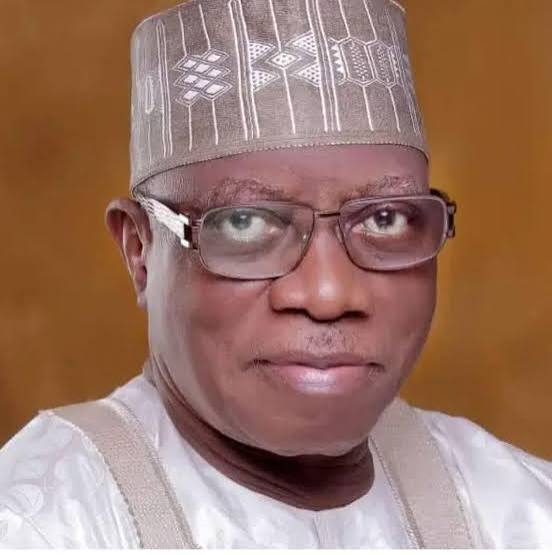
By Ibrahim Salaudeen, Lagos Yakubu
Tributes poured in for veteran journalist Yakubu Mohammed yesterday, in Lagos, as colleagues, admirers, and media professionals gathered to honour a man widely regarded as a quiet revolutionary in Nigerian journalism.
Veteran journalist and Jagun Oodua, Chief Tola Adeniyi, reflected on Mohammed’s extraordinary life, describing it as one shaped from an early age by destiny and discipline.
Adeniyi, who chaired the Newswatch 5th Lecture Series and Tribute Session held in Lagos to honour Mohammed’s life and contributions, said that the late journalist’s journey into journalism was deliberate and driven by passion.
Unlike many who stumble into the profession, Mohammed deliberately pursued journalism with clarity and commitment. Adeniyi invoked the famous words of Benson Idahosa, noting that Mohammed “desired, aspired, perspired and acquired” the heights he reached in his career.
“He walked into journalism, worked his way into it, prepared for it and laboured for it,” Adeniyi said
He recalled how Mohammed’s father gifted him a Qalam—the Arabic word for pen—long before the young boy understood that his future would be forged by its power.
Though journalism is often associated with boldness, noise, and flamboyance, Mohammed stood apart. Reserved, disciplined, and deeply focused, he rejected the theatrics commonly linked with the profession. Yet, paradoxically, he became one of its most respected figures—proving that influence need not be loud to be powerful.
His career spanned notable institutions, from Kaduna radio to campus journalism at the University of Lagos, and later the New Nigerian newspaper, where he rose to prominence.
His defining legacy, however, remains his role as co-founder of Newswatch, a publication that redefined investigative and analytical journalism in Nigeria.
Adeniyi noted that Mohammed did not conform to journalism’s traditional persona; instead, he compelled the profession to reflect his own character—measured, principled, and dignified.
He spoke little, avoided self-promotion, and allowed his work to command attention. His silence, Adeniyi remarked, “was as loud as the sound of the Gbedu drum.”
Apart from his professional accomplishments, Mohammed was remembered for using his influence not for personal gain but to advocate for the disadvantaged. Despite access to power and privilege, he maintained humility, earning admiration across generations of journalists.
The lecture also highlighted key lessons from his life: the importance of discipline, knowledge, professionalism, and self-respect.
Mohammed encouraged journalists to focus on excellence rather than chasing wealth or fame, insisting that recognition naturally follows mastery.
His autobiography, Beyond Expectations, and his career trajectory continue to serve as guiding lights for aspiring media practitioners. From his meticulous appearance to his intellectual depth, Mohammed embodied a standard that elevated the profession.
Adeniyi concluded that Yakubu Mohammed’s legacy remains indelible—anchored in integrity, simplicity, and excellence.
Though he is gone, his influence endures in newsrooms, in print, and in the ethical compass of Nigerian journalism.
“Yakubu Mohammed lives on,” Adeniyi said, “in journalism’s imperishable hall of fame.”