






















By Ayobami Ife, Abeokuta
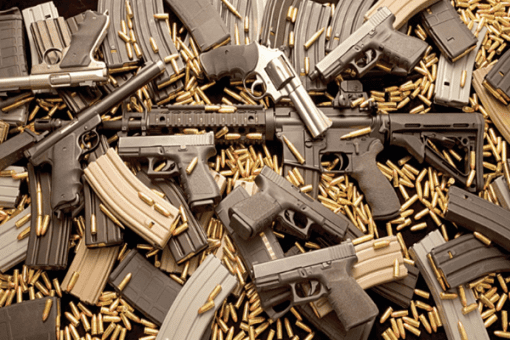
The South-West Zonal Office of the National Security Adviser (ONSA), through the National Centre for the Control of Small Arms and Light Weapons (NCCSALW), says it is considering entering into collaborative arrangements with traditional rulers, religious leaders and community stakeholders in a renewed push to mop up illicit arms in the South-West and other geopolitical zones of Nigeria.
It also noted the need to design an amnesty programme for individuals who voluntarily surrender illegal arms to the authorities, without the risk of prosecution or punishment.
Zonal Director of the centre in the South-West, Mr Abiodun Alamutu, a retired Commissioner of Police, disclosed these yesterday in Abeokuta during a one-day seminar themed “Effective Post-Judgment Management of Small Arms and Light Weapons.”
Alamutu expressed concern over the scale of arms proliferation, noting that an estimated Five million illicit small arms and light weapons remain in circulation across the country, largely in the hands of non-state actors, describing the development as a major threat to national security.
He said the agency is now shifting its strategy from largely intercepting weapons at the borders to focusing on retrieving those already within communities.
“We have realised that a significant number of these weapons are already in circulation among non-state actors. That is why we are redirecting our efforts towards mopping them up internally,” he said.
As part of the new approach, Alamutu revealed that the centre is considering an amnesty programme that would encourage individuals to voluntarily surrender illegal arms without fear of prosecution.
He stressed the importance of grassroots collaboration, noting that traditional rulers, community leaders and civil society organisations would play a key role in persuading individuals to give up illicit weapons.
The zonal director also highlighted ongoing efforts to institutionalise proper documentation and transfer of recovered arms from police formations nationwide to the centre, aimed at improving accountability and control.
Despite these measures, he identified Nigeria’s porous borders as a persistent challenge, calling for the deployment of modern technology to strengthen surveillance and prevent further inflow of illegal arms.
Also speaking, Ogun State Commissioner of Police, Bode Ojajuni, called for stronger inter-agency collaboration in the South-West to ensure effective recovery of illegal arms and improved regional security.
Ojajuni urged the NCCSALW to develop faster mechanisms for retrieving weapons after court rulings, stressing that delays in transferring arms from police custody could undermine control efforts.
In a lecture delivered at the seminar, Associate Professor of International Relations and Strategic Studies at Chrisland University, Dr. Kunle Olawunmi, warned that poor post-judgment management of seized weapons is contributing to Nigeria’s worsening insecurity.
He described the post-judgment phase as a “critical but often neglected stage” in the criminal justice process, noting that improperly documented or poorly secured weapons could find their way back into circulation.
“The responsibility of the justice system does not end with conviction. The handling of recovered weapons after judgment is equally crucial,” he said.
Olawunmi identified key gaps, including weak documentation, poor coordination among agencies and inadequate armoury systems, which he said create opportunities for theft, substitution and re-circulation of arms.
He recommended the establishment of a unified national framework for post-judgment arms management within six months, alongside the deployment of a secure digital tracking system, standard operating procedures and regular independent audits.
The don also stressed the need for designated and trained officers across relevant institutions to oversee documentation, transfer and disposal of seized weapons.