






















French cement company Lafarge has been convicted of paying millions of dollars to armed groups, including Islamic State (IS), in order to maintain its operations in Syria during the country’s civil war.
Eight former Lafarge employees were also found guilty of financing terrorism. Among them was former CEO Bruno Lafont, who received a six-year prison sentence on Monday, according to BBC report.
A court in Paris determined that the company transferred approximately $6.5 million (€5.59m; £4.83m) between 2013 and 2014 to ensure its cement plant in northern Syria remained operational.
Presiding judge Isabelle Prevost-Desprez stated that these payments strengthened banned groups by giving them access to valuable natural resources, which in turn funded attacks across the Middle East and Europe.
“It is clear to the court that the sole purpose of the funding of a terrorist organisation was to keep the Syrian plant running for economic reasons. Payments to terrorist entities enabled Lafarge to continue its operations,” Prevost-Desprez said.
“These payments took the form of a genuine commercial partnership with IS,” she added.
In response, Lafarge told the BBC that it accepts the ruling, noting that it “concerns a legacy matter involving conduct that occurred more than a decade ago and was in flagrant violation of Lafarge’s code of conduct.”
The company further described the judgment as an “important milestone” in addressing the issue responsibly.
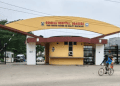
Lafarge acquired the Jalabiya cement plant in northern Syria in 2008 for $680 million, and operations began in 2010, shortly before the outbreak of the Syrian civil war in 2011. Employees were based in the nearby town of Manbij and had to cross the Euphrates River to reach the facility.
Prosecutors revealed that payments made between 2013 and September 2014 included €800,000 for safe passage and €1.6 million to purchase raw materials from quarries controlled by IS.
The court also found that Lafarge paid money to the Al-Nusra Front, another proscribed militant group.
Alongside Lafont, former deputy managing director Christian Herrault was sentenced to five years in prison. Firas Tlass, a Syrian staff member who facilitated payments to the armed groups, received a seven-year sentence in absentia.
Herrault defended the decision to keep the plant running, arguing it was motivated by concern for employees:“We could have washed our hands of it and walked away, but what would have happened to the factory’s employees?” he said.
Lafarge, now owned by Holcim, was fined more than €1 million ($1.3m). Authorities are continuing a separate investigation into possible complicity in crimes against humanity.
This case marks the first time a company has been prosecuted in France for financing terrorism.
It follows a 2022 case in the United States, where Lafarge admitted to supporting banned groups and agreed to pay a $777.8 million (£687.2m) penalty for similar actions.
The Syrian civil war began in March 2011 after protests against then-president Bashar al-Assad were violently suppressed. In 2014, IS militants captured large areas of Syria and neighboring Iraq, declaring a cross-border “caliphate” and enforcing a harsh interpretation of Islamic law.