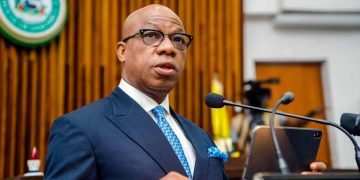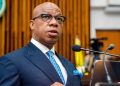













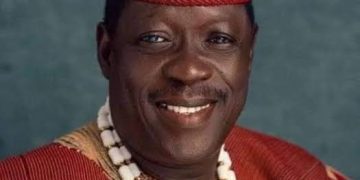











A fresh political storm has erupted over the performance of Abia State Governor, Alex Otti, following a scathing critique by activist and former presidential candidate, Omoyele Sowore, who recently described the administration as a “failure” despite what he termed massive financial inflows.
Fueling the controversy, Abia-born commentator, Eke Ako, has thrown down a bold ₦15 million challenge to anyone who can provide verifiable evidence of projects commensurate with the state’s reported capital expenditure under Otti.
Ako, in a strongly worded statement, backed Sowore’s position, insisting that the reality on ground does not reflect the scale of spending recorded in official financial documents published by the Abia State Government.
According to the figures cited, Abia recorded capital expenditure of ₦62.17 billion in 2023, ₦215.46 billion in 2024, and ₦322.02 billion in 2025 — bringing the total to approximately ₦600 billion within three years.
“Let’s stop propaganda and deal with hard numbers,” Ako said, arguing that such a sum should translate into visible and verifiable infrastructure across the state.
Using basic projections, he claimed that ₦600 billion could deliver at least 60 major projects valued at ₦10 billion each or approximately 750 kilometres of Trunk B roads at an estimated ₦800 million per kilometre.
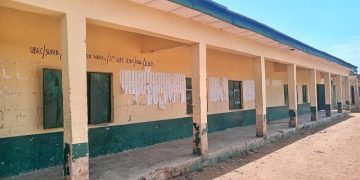
“So where are they?” he queried, alleging that the government cannot point to even 30 kilometres of completed, verifiable new roads.
To test the claims, Ako announced a tiered reward system: ₦5 million for each year where evidence can be provided of completed projects — 10 projects in 2023, 20 in 2024, and 30 in 2025 — all backed with verifiable proof including locations, costs, contractors, and photographic evidence.
The challenge has since ignited heated debate across political and civic spaces, with supporters of the Otti administration pushing back, citing ongoing infrastructure works and reforms, while critics insist that tangible, completed projects remain insufficient relative to the funds reportedly spent.
A resident in Aba who elected to remain anonymous claimed that since the return of democracy in 1999, Abia State – home state of leader of the proscribed Indigenous People of Biafra (IPOB), Mazi Nnamdi Kanu, has been plagued with maladministration and poor accountability.
Sowore’s remarks, which triggered the latest exchange, reflect a growing demand for transparency and measurable outcomes in governance, particularly as states continue to receive increased allocations in the post-subsidy era.
A number of indigenes and residents say the controversy underscores an increasing concern over the Abia State public administration — the gap between budgetary figures and visible development — and the rising role of citizen-led accountability in bridging that divide.
As the debate intensifies, attention is now turning to the Alex Otti – led Abia State Government to respond with detailed project lists and verifiable data that could either validate or counter the claims.
Again, for many residents, however, the central question remains unchanged: beyond the numbers, what exactly is on ground?