






















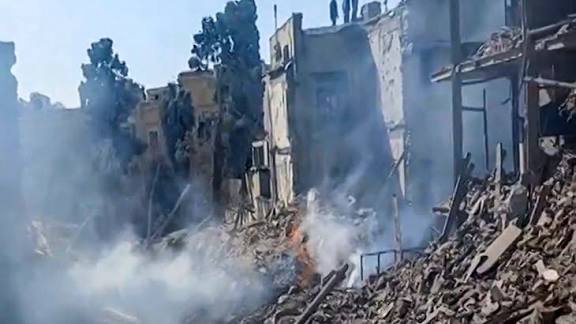
The world woke to a sudden and dramatic escalation of hostility in the Middle East on the morning of February 28. At dawn, coordinated air and missile strikes by the United States and Israel hit key military and strategic sites across Iran’s capital, Tehran, and other cities. The offensive, publicly described by Israeli officials as a pre-emptive action meant to eliminate what they termed an “existential threat,” sent shockwaves across the region. Sirens blared and explosions lit up the skyline as fighter jets and cruise missiles believably struck defense infrastructure and government facilities, according to Reuters.
Israeli and American leaders framed the operation as a necessary step to prevent Iran from developing nuclear weapons and posing substantial threat to allies and U.S. forces.
Netanyahu commended President Donald Trump for his historic leadership in the ongoing efforts to remove the existential threat posed allegedly by the terrorist regime in Iran.
According to statements released by Washington, the offensive — code-named in some circles as Operation Epic Fury — was the culmination of months of planning and military buildup in the region.
…Tehran Under Fire — Civilian Toll and Chaos
In Tehran and beyond, the immediate impact was stark. Smoke rose from key districts as infrastructure was damaged, flights were grounded, and communications were disrupted. Reports began emerging of civilian casualties and destruction of urban areas — including a tragic strike on a girls’ school in the south of the country — fueling widespread distress and anger among Iran’s population.
Iran’s Supreme Leader, Ayatollah Ali Khamenei, was reportedly moved to a secure location as the capital shook, while President Masoud Pezeshkian went on state media to reassure citizens that essential services would continue despite the strikes.
“No Leniency” — Iran’s Retaliation Begins
Within hours of the U.S.–Israel offensive
Iran’s elite Islamic Revolutionary Guard Corps (IRGC) launched a broad retaliatory campaign. Missile and drone barrages were fired toward Israel, prompting widespread emergency alerts and air defenses to activate across the country.
Iran also targeted U.S. military bases and installations throughout the Gulf region — including in Qatar, Kuwait, the United Arab Emirates, Bahrain, and Saudi Arabia — asserting that all American and Israeli interests in the Middle East were now “legitimate targets.”
Explosions and air defense interceptions were reported over Israel and several Gulf states, with at least one civilian fatality confirmed in Abu Dhabi from intercepted missile fragments. Other nations hosting U.S. forces condemned the attacks as violations of their sovereignty..