




















By Jane Okafor, Abuja
Kogi State has unveiled plans to raise a ₦50 billion Sukuk bond to accelerate the construction of the Kogi State International Airport and the Lokoja International Market.
It said that construction of the airport and international market would commence in March this year.
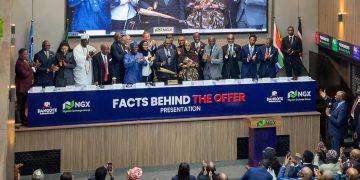
The state unveiled the plan at an investor engagement and market sensitisation forum in Abuja where the Commissioner for Finance, Budget and Economic Planning, Asiwaju Asiru Idris, emphasized the purpose of the bond.
Idris revealed that the Sukuk would be asset-backed, infrastructure-focused and aligned with the state’s long-term development framework.
He said the bond programme was designed to accelerate the delivery of critical infrastructure and not as a response to fiscal pressure.
“This ₦50 billion Sukuk is strictly for infrastructure. It is dedicated to the Kogi State International Airport and the Lokoja International Market,” he said.
He also disclosed that the State Executive Council and the House of Assembly had approved the transaction, while the government had also applied for an Irrevocable Standing Payment Order (ISPO) from the Federal Government to strengthen investor confidence.
According to him, Governor Ahmed Usman Ododo has directed that the state should move swiftly, with March set as the target period for fund release and construction take-off.
“Our target is March. If it shifts slightly, it will not derail the project, but we are determined to avoid unnecessary delays,” Idris said.
He added that the procurement process for the airport project would begin within weeks, noting that the state had engaged experienced financial and technical advisers to fast-track documentation and regulatory approvals.
The Sukuk, structured as a senior unsecured Ijara Sukuk, will be issued at ₦1,000 per unit, with a total programme size of ₦50 billion and a tenure of between five and seven years. It will be offered through a book-building process, with a minimum subscription of ₦5 million.
Managing Director of AVA Capital Group, Kayode Fadahunsi, said the projects were structured to generate revenue capable of supporting repayment.
He explained that the funds would be monitored through multiple oversight layers, including the Securities and Exchange Commission (SEC), a Sharia Advisory Board and an independent Project Management Committee, which will provide quarterly reports to stakeholders.
Addressing concerns on pricing and listing platforms, Fadahunsi said Sukuk instruments were generally competitively priced and could be listed on either the Nigerian Exchange (NGX) or FMDQ for secondary market trading.
Officials also clarified that any call option on the Sukuk would only arise after the completion and delivery of the underlying assets, in line with Sukuk requirements.
On security, Idris said the state had strengthened safety measures through the deployment of surveillance drones, training of over 1,050 hunters across local government areas and the absorption of vigilante operatives into the civil service.