
















By Biodun Olamosu
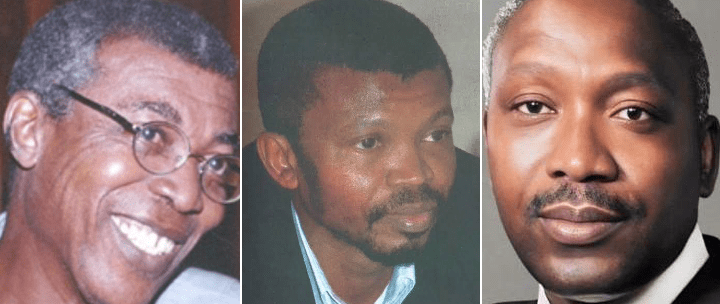
The death of these four foremost radicals and revolutionaries Alao Aka-Basorun, Bala Usman, Beko Ransome-Kuti, and Chima Ubani within a short period of one year is a big blow to the radical movement in the country. It is significant to state that their death came at a period Nigeria is at a cross road, when questions are being raised on how to move the country forward. During their time, they were often involved in the quest for what could be done to carry on the struggle. In providing answer to all this, the opinions and feelings of Nigerian masses were uppermost in their minds. Alao-Aka Basorun for instance took the lead in the early 90’s when he pioneered the formation of a coalition of change-seeking political groups to confront the military government led by Ibrahim Babangida that was toying with the future of the country.
This coalition crystallised into what was later known as Campaign for Democracy (CD), which played a leading and decisive role in the struggle against military dictatorship of Babangida, Abacha, Abubakar Abdulsallam. It will be recalled that the numerous human rights organizations, as we know them today, were not yet in existence at the time. The few that had been formed were yet to find their feet; more or less, they were at their infancy stage.
Bulk of the organizations that made the list of the coalitions included Academic Staff of Universities Union (ASUU), Women in Nigeria (WIN), National Association of Nigerian Students (NANS), Nigeria Bar Association (NBA), Nigeria Labour Congress (NLC) etc. The coalition challenged the regime of Ibrahim Babangida and requested it to convene the Sovereign National Conference where the problem confronting the country could be tabled for discussion and addressed appropriately When the government did not seem to take this demand seriously, the organization made necessary arrangement to convoke the conference on their own. The venue of the conference was put at the National Theatre, Iganmu, Lagos.
True to type, the military dictatorship under Babangida disrupted the taking off of the conference as planned. The venue of the conference was sealed up, and the police took over the control of the premises. Though, the conference did not take place as planned, this did not stop the avalanche of debates that ensued thereafter especially in the press (newspapers) and on the streets, communities, working places, churches, mosques, schools, homes etc. This must have sent necessary lessons to the government in clear terms that there time was up and that they had to embark immediately on a transition to civil rule if they were not to provoke the anger of the people.
The government, therefore, did not have any other alternative than to round up its unending transition that was largely becoming boring and deceitful more, so the terminal date earlier fixed by the government for 1991 had been postponed three times. Nevertheless, the government still wanted to renege on its promise after the elections to the various positions had taken place. Its reluctance to hand over power led to the annulment of June 12, 1993, presidential election results where M.K.O. Abiola was well known to have clearly won. Alao-Aka Bashorun was actively involved in the struggle against the annulment. He was also the leading lawyer who defended M.K.O. Abiola, who was later detained by Sanni Abacha, led military government – the regime that came to power to continue the philosophy of Babangida military junta.
Campaign for Democracy before the June 12 election was not in support of Babandiga’s political transition programme. The organization was not deceived about what the government was up to as it was perceived not being sincere about its promises for transition. This informed the reason CD vehemently canvassed for a transition that will be conducted by a transitional government of the working people rather than the military government in power. But things changed abruptly when the annulment took place. The organization took a strategic position to fight against the annulment. Campaign of greater magnitude that was never known in the post-independence Nigeria emerged against the military rule and the annulment of the June 12 presidential election. A call was made on the government to reverse itself and for commitment to actualise the outcome of the election by declaring the result from it that was in favour of M.K.O. Abiola, who won the election.
The role of Chima Ubani came handy here. Chima, at this time, was an education officer of a newly constituted human rights organization, Civil Liberty Organisation (CLO), the first of its type formally formed in the country. Due to the interest of the organization (CLO) in the political development going on in the country, Chima was seconded to CD for the purpose of working there on a full-time basis. He thereafter became the General Secretary of the organization (CD) while Beko Ransome-Kuti became the Chairperson. The leadership of Beko Ransome-Kuti as the Chairperson of CD was exemplary. He was a very committed activist of liberal extraction. He can best be compared with Tai Solarin and Bertrand Russell in popular struggle. Beko Ramsome-Kuti put everything he had, including his connections to finance the organization. He differed very much from theoreticians and armchair social critics. He loved to be at the forefront of the barricade himself. He had, in return, received bashings and canisters of tear gas for leading such protests.
He was detained many times when occasion demanded from him to lead protests. One of such circumstances was when he was tried by the military tribunal that found him guilty of leaking out state secret, which earned him life imprisonment. What was his offence? As a human right campaigner, he got hold of the information that the alleged coup plotters like Olusegun Obasanjo, Musa Yar’adua and others had been secretly tried and found guilty by the military tribunal set up by Sanni Abacha military junta. The result of which was that they would be executed any time from that date. Beko Ramsome-Kuti faxed this message to other human rights organizations across the world. This was the only offence of Beko Ramsome-Kuti that was responsible for his being arrested, tried, court marshal, and found guilty. This earned him life imprisonment by the junta military tribunal. He remained an uncompromising activist till the end. This informed why he was able to hold his stand for long as a responsible leader of popular struggle before his death at the age of 66.
Beko Ramsome-Kuti and Chima Ubani later parted ways on methods of how to forge ahead in the struggle of June 12. This caused the split among the ranks that made up the organizations (CD). Chima Ubani’s faction later formed another coalition of groups named United Action for Democracy (UAD) led by Olisa Agbakogba, while Chima Ubani remained the General Secretary of the new formation. Beko Ramsome-Kuti remained the chairman of CD until he was released from prison in 1998 after the death of Sanni Abacha.
UAD contributed a great deal to revamp the popular struggle at the time of its emergence when CD was in a state of comatose but was only heard for its press statements on the pages of newspapers. The circumstances responsible for this state of the organization might be understandable, taking into consideration that two key leaders of the organization (including Shehu Sanni, Deputy President North) were in detention too at the same time. But this also exposed the weakness of the organization that can not hold its stand because its leaders were in detention.
Another coalition, JACON led by Chief Gani Fawehinmi, was later formed to accommodate members of CD, NADECO, and other new emergent groups that wanted change from the state of lull that had enveloped the polity. The organisation started to add value to the popular struggle of the moment before the emergence of the new regime after the death of Abacha. When the government of Abdulssalam Abubakar came, he promised a new transition programme to return the country to “democracy” after a year. JACON was divided on the issue of whether to trust the government and participate in the transition as promised or not. Some left the organisation to take part in the process of forming political parties in preparedness to contest elections in the transition. The set of groups that remained and forged ahead in the struggle against military rule were the core activists with revolutionary background that have been involved in the struggle from below for the purpose of achieving genuine change in the polity; unlike the old politicians that can best be described as the second eleven of the military rulers; who are also part of the problem facing the country.
Bala Usman can not be left out in the struggle against the annulment of the June 12 presidential election result. His voice, together with other political comrades of his including Alhaji Balarabe Musa, were heard. Their group rose up to the occasion. However, later in the course of the struggle, nothing was heard from this end again. Their excuses were that the struggle had been ethnicised with a dose of ethnicity. A known member of their group, Dr. Iyorcha Ayu even labelled CD as an anarchist group. The beauty of struggle is that the more some are becoming a source of disappointment, the more others are coming forth into the fold of the struggle. The emergence of some other militant youths and leaders like Abubakar Umar from the north that came to embrace this group is usually referred to in the past as northern radicals.
This June 12 struggle, it must be accepted and actually divided the ranks of the formerly known left groups across the country. Bala Usman, for instance, was known to have expressed himself in an article against NGO’s Syndrome in the country. He traced the origin and funding of such organizations to be pro-neo-liberal capitalist donors that do not want genuine change but a caricature, one of reformist type.
This angered the other left in the southern part of Nigeria , and they believed they were acting in response to the changing circumstances of the moment. This article from Bala Usman led to the exchange of letters between him and Toye Olorode of Obafemi Awolowo University, Ile Ife. There is no denying the fact that the NGO’s syndrome was a setback in the struggle for genuine democracy in the country. But at the same time, it is not enough to lament on the failure of others as an excuse of doing nothing to actualize one’s own position. The fact remains that among the left groups in the Southern Nigeria, we have cases of others that did not share the idea of NGO’s but prefer to maintain their own identity and collaborate with others when necessary on the basis of united front perspective to broaden resistance against the common enemy that the military government personified.
One would have expected the Northern radicals to adopt such strategic position of work rather than abandoning the struggle totally on the basis that their other colleagues in NGO’s are working for imperialist interest. Both sides are no doubt wrong. While the NGO’s supporters believe that they are involved in NGO for the purpose of raising enough finance to execute their programme that is antithetical to the interest of imperialism. They forget to note that they are not playing game with toddlers but with donors who are master schemers than themselves. On the other hand, the other side forget to note that the government of the country they left alone are agent of imperialism and there is a limit they can go in fighting imperialism without adopting revolutionary line, which require mobilization of the people for such goal and equally fighting their agents at home too. It was for this reason that NGO’s donor countries compelled the NGOs under them to abandon the struggle for June 12, which to them had stretched for too long. Instead, they wanted them to accept the need for another transition. This was the reason many of the political associations and human rights organizations at the time succumbed to accept Abdulssalam Abubakar transition.
One important point to the credit of Bala Usman and his comrades from the North is that as a group, they are the closest to the corridor of power among radical political activists in the country. They have had access to control political machinery that made them to occupy position of responsibilities at the legislative houses and as Governors of two states of the federation. The old Kaduna and Kano states that have now been further splitted into four to include Jigawa and Kastina States. But instead of using this opportunity to build revolutionary vanguard that would have assured the future of revolutionary movement in the transformation of the country to achieve socialist Nigeria, they played politics like other social democratic political tendency, limiting politics to what good the people could achieve from the government. This was the very reason, the non-socialist members of the party, (PRP) who were at the leadership level of the party collaborated with the external forces outside the party to weaken the socialist forces within the party, but since the socialist core themselves did not do anything to pursue their goal; they were therefore found hands gapping.
Nevertheless, in the course of their sojourn in power, Bala Usman and Balarabe Musa as Secretary and Governor of Kaduna State respectively were a shining example of what revolutionaries in power could look like. They were incorruptible, simple in outlook and carriage. They exhibited forthrightness and truth and served as a symbol of a better future for Nigerian people. It must also be said of them that they empowered other radical and revolutionary organizations apart from their own group and not as individuals (comrades) in power are doing today.
These four radicals were professionals in their chosen areas of endeavours and they would have committed their energy and intellect more in their respective discipline under normal circumstances if political leadership are responsible enough to handle things with greater social commitment. Aka-Alao Bashorun studied law at the London School of Economics and Political Science. On returning back to Nigeria at a period when the country was in the firmament of independent struggle, the young Aka Bashorun instead of going to Law School and started a career in law, opted for something else. He went into farming, believing that it would sustain him as a full-time political revolutionary. Invariably, he put the idea of practising law behind him until many years later when a relative of his had a case in court that needed his personal touch. So, it can be said that Alao Aka Bashorun was first and foremost a political activist before being a lawyer. One can not differentiate between his law practice and political activism. Alao Aka-Bashorun was at the forefront of the struggle for independence as a young revolutionary. He rendered legal services free of charge to students, lecturers, workers, and their unions. His progressive leadership role at Nigeria Bar Association (NBA) can never be forgotten in a hurry. As the president of NBA, he mobilized other lawyers in the country to embark on strike against the military dictatorship of Ibrahim Babangida that refused to respect court orders.
Bala Usman remained an intellectual activist, researcher academic, and a teacher at Ahmadu Bello University for many years before his death at the age of 60. He was a historian of repute. His doctorate thesis was titled: “The Transformation of Kaduna C1400-1883” at Ahmadu Bello University (ABU), where he taught history for many years. He was at the leadership of the Department of History and one of the reliable leaders of lecturers’ Union, ASUU. He was a well published scholar of our time. He used to write assays on contemporary political development for the purpose of clarifying issues of importance for Nigerians. He was a member of the committee for the preview of Nigerian foreign policy (1975-76) and the Constitution Drafting Committee (1976) which produced a minority report with Segun Osoba, another University don at the University of Ife (now Obafemi Awolowo University). He turned down his nomination as a member of the recent (2005) constituted Political Conference by President Olusegun Obasanjo. Beko
Ransome-Kuti was from the famous Ransome-Kuti’s family that has been well known for their political activism. Beko Ransome-Kuti was a physician. He was committed to the cause of physicians in the country. He led the Nigeria Medical Association for many years, where he distinguished himself as a thorough brand activist of note. It can well be said that Beko’s leadership of the professional group (NMA) brought the association to their social responsibilities of caring for the people. On many occasions, NMA embarked on strikes against the government so that it could be alive to its social responsibilities of meeting the health needs of the masses.
Chima Ubani was a student activist at the University of Nigeria, Nsukka. He was the president of the Student Union Government of the school in 1988. He studied Agricultural Science at the University. His ambition was to proceed to the University of Ibadan for his M.Sc. degree, but this plan changed with the political development of the period, which was responsible for his appointment as an education officer at Civil Liberty Organisation. This was how he thereafter wholeheartedly committed his entire life to politics of revolutionary type. He later had a Master’s Degree in Mass Communication from abroad, though he wholeheartedly utilized it for the purpose of the struggle.
•Biodun Olamosu writes from the
Centre for Social Policy and Labour Research (SOPLAR)
Signs & Wonders Shopping Complex
Iyalobe Ekotedo
Dugbe, Ibadan
+2348175109802
•Opinions, positions or thoughts expressed here are personal and strictly of the writer/author and do not represent the views of The Daily Crucible.