














Nigeria must dismantle the structures that enable state-sanctioned political violence. As the Yoruba proverb cautions, it is when the Iroko tree is a young sapling that we must uproot it; once it matures into a giant, it demands sacrifices from the entire community
By Festus Adedayo
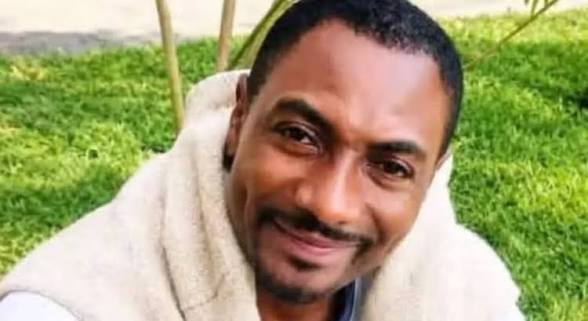
Last Wednesday, popular political commentator, Ibrahim Khalil (aka Dan Shagamu) was brutally murdered in Kumbotso, Kano. He had his throat slit. Known for his scathing Hausa posts on Facebook and TikTok, Khalil was a fierce critic of the APC-led government, President Bola Tinubu and the military. Kano Governor Abba Kabir Yusuf also frequently drew his ire, as he hit him hard with his spatula. The influencer constantly called out economic hardship, northern insecurity, and alleged army atrocities against Fulanis. Condemning his murder, Amnesty International Nigeria highlighted the growing threats facing government critics.
This tragedy mirrors the July 10, 1981 murder of 35-year-old Dr. Bala Mohammed in Kano. It was a defining political hit of the Second Republic. Decades apart, both killings point to a persistent menace: political thugs acting as ruthless enforcers for the ruling class, leaving a long-standing trail of violence, blood, and broken institutions across Nigeria.
Forty five years before Dan Shagamu, Dr. Mohammed was equally mercilessly murdered in same Kano. Often dubbed the Kano “July 10 Rampage,”Mohammed’s brutal killing remains one of Second Republic Nigeria’s most terrifying and defining political killings. The masterminds of that dark day were political thugs — the very same dangerous, rampaging breed that disrupted the peace of Benue State last week and who likely killed Dan Shagamu. Like swarming wasps defending a rotten nest, political enforcers have long served as the blunt force instrument of Nigerian statecraft, leaving behind a trail of ashes, blood, and broken institutions.
Dr. Mohammed was murdered in a lethal convergence of traditional feudal allegiance, party rivalry, and federal-state power struggles. His killing illustrated the horrific mechanics of state-tolerated violence inflicted upon political oppositions. At the time, Bala served as the Special Adviser on Political Affairs to Alhaji Abubakar Rimi, the radical leftist People’s Redemption Party (PRP) governor of Kano State.
Though the next general elections were still two years away, political upheavals had already seized Kano by the throat, in preparation for the 1983 polls. President Shehu Shagari’s ruling party at the center, the National Party of Nigeria, (NPN) which operated as an opposition party in Kano State, was in an intense, desperate campaign to capture the state’s massive voting population. On the streets of Kano, violent rhetoric and inciting epigrams became as cheap and ubiquitous as tuwo masara.
The immediate flashpoint for this political explosion was Governor Rimi’s growing friction with the Emir of Kano, Alhaji Ado Bayero. In early July 1981, Rimi issued an official query to the revered monarch, demanding explanations for acts the state administration classified as official insubordination.
The NPN, frantically seeking an inroad into Kano’s vast electorate, seized upon the query to confront the Rimi administration head-on. Mobilizing royalists, traditionalists, and a broad coalition of political opponents, the NPN framed the query as a sacrilegious assault, a direct attempt to humiliate the traditional aristocracy of the Kano Emirate system. They preached to the populace that Rimi’s ultimate agenda was the deposition of the Emir.
In this carefully crafted narrative, the NPN singled out Dr. Bala Mohammed. The brilliant leftist intellectual in Rimi’s cabinet was woven in as the master strategist and primary author behind the query. He was also seen as architect of the administration’s broader anti-feudal policies and a rumoured upcoming government white paper targeting traditional privileges.
If the Nigerian state fails to hold recruiters and enforcers of political violence accountable, its politics will continue to degenerate into a contest of brute force, mirrored by the killing of Dan Shagamu. Soon, we will arrive at an intersection where public policy is dictated not by debate or democratic consensus, but by the power of the armed mob
Thus, on Friday, July 10, 1981, immediately following Jumaat prayers, a premeditated anarchy erupted across Kano. Political mobs and armed thugs, moving with the directionless fury of ojúoró and òsíbàtà — the floating water lettuce and lilies of Nigerian rivers — meandered through the ancient city. Before Kano could blink an eye, coordinated violence enveloped the metropolis. Armed with cutlasses, daggers, and arson weapons, the mobs operated under the guise of defending the throne against aróbafín — those who displayed contempt and insolence toward royal authority.
State institutions perceived to be offering the PRP ruling party government of Rimi backing received the first deadly salvo. Kano State House of Assembly, government ministries, Radio Kano, and offices of The Triumph newspaper were torched.
Then, like an invading army of locusts, the political mob matched towards the GRA home of Dr. Bala Mohammed. The egghead was right inside his official residence. Pronto, the mob decorated the house in a hieroglyphics of gasoline. They also cut off his escape routes, trapping Dr Mohammed within. He was then treated to a session of machetes and dagger blades, like butchers do on meats at the abattoir. Done with this nicely decorated but deep severe wounds on Bala, which gushed fresh blood from the orifices of their mouths, the mob then set the scholar’s residence on fire. By then, he had been mercilessly tattooed with matchete wounds, his life hanging on a cliff. Gradually, like a weaver builds a tapestry, the fine scholar was incinerated alive, alongside tonnes of his documents and research materials. After the mob’s dispersal, Dr. Mohammed’s charred remains were retrieved amid the smoldering ruins.
Public outrage over the carnage eventually forced President Shagari to momentarily stub out his Benson & Hedges cigarette. He then instituted an inquiry, a Judicial Commission headed by Justice E. A. Fernandez. Its charge was to investigate the rampage.
The commission’s findings were damning: it confirmed that state security forces were directly complicit in the tragedy. The Nigeria Police Force, led by Inspector-General Sunday Adewusi and controlled by the NPN-led federal executive, stood by idly while rioters rampaged across the city for hours. Justice Fernandez concluded that the police purposefully allowed the mob free rein.
By the time the violence subsided, an estimated 34 people had been killed, with Dr. Bala Mohammed as the primary high-profile target. Millions of Naira in public and private property lay in ruins. Yet, despite the commission’s clear findings, the masterminds and political instigators were never held criminally accountable. Just as the identity(ies) of killers of Dan Shagamu may never be unraveled. This failure to punish perpetrators has established a dangerous precedent of impunity for state-sponsored political violence in Nigeria.
I recount this long, dark chapter of political assassination – an this recent one – to emphasize a fundamental truth of human conflict. As the classic Yoruba proverb warns:”Ìbèrè ogun l’àá mò, ẹnìkan kìí mọ ìparí è — We only know the beginning of a war; no one can predict how it will end. This proverb serves as a solemn warning against the unpredictable, destructive, and uncontrollable nature of political violence that has become the face of Nigerian politics.
During the First Republic, the Western Region witnessed the rise of violent political thugs called enforcers. They were shawled in the deceptive title of Májêkóbàjé (Do not allow things to deteriorate). Ironically, under their watch, public order deteriorated completely as political arson, popularly known as Operation Wetie, turned homes and public buildings into smoldering ash.
Across Nigeria’s distinct socio-linguistic landscape, various terms exist to describe these political enforcers: In Lagos, they are historically referred to as Òráìsà(derived from their servile chant, “Alright, Sir!”) and modern Agbèròs. In the North, they are known as Yan Daba and nationwide, are colloquially termed “Kill and Go.”
In the North, the ruling Northern People’s Congress (NPC) systematically suppressed political rivals like Aminu Kano’s NEPU and Joseph Tarka’s UMBC. The NPC deployed the Native Authority police and Yan Daba enforcers to crush internal dissent — a sharp contrast to South Africa’s uMkhonto weSizwe, which was formed to fight state apartheid rather than fellow citizens. Ultimately, politicians unleashed forces of violence that spiraled out of control and destroyed Nigeria’s First Republic. This widespread breakdown of law and order provided the military with its primary justification for the bloody January 15, 1966 coup d’état.
This brings us to recent events surrounding Peter Obi, the presidential candidate of the NDC. You may not like Mr. Peter Obi; you may even despise his political guts or campaign methods. But during his recent visit to Benue State, Nigeria stood on the precipice of tragedy once again, something of the Bala Muhammed hue. When hired political thugs blocked Obi’s passage into Benue, the nation narrowly avoided a catastrophe akin to the 1981 Kano massacre. Had Obi’s security detail or supporters chosen to return fire, the resulting escalation could have ignited widespread civil unrest across the region.
The thugs who waylaid Peter Obi in Benue and those who murdered Bala Mohammed 45 years ago are direct political descendants. They belong to the class of “flies who death don’t scare,” a clan my people dub “esin ò k’okú.” Their actions represent a lineage of political violence that has plagued Nigeria for about seven decades.
Whatever reason took Peter Obi to Benue State was irrelevant under the law, provided his mission was lawful. Yet, as his convoy proceeded, suspected political thugs, armed with weapons, intercepted his path along the Boko Road near the Air Force Base. The mob blocked the highway, pursued vehicles in his entourage, and pelted his convoy with stones. Sensing danger, his team attempted to escape the ambush. This incident marked the second time Obi was forcibly prevented from moving freely within Benue State. In April 2025, the state governor, Rev. Fr. Hyacinth Alia, similarly barred Obi from accessing internally displaced persons (IDP) camps in the state, citing official security and protocol concerns.
Of course, political demagogues queued around the ugly behind of tyranny. Such treatment was necessary for a political wayfarer like Obi, they chorused.
Long before today’s street enforcers were born, their political predecessors patrolled electoral corridors with unearned impunity. Nigeria’s post-colonial political architecture was constructed around a violent doctrine: that power in Nigeria is rarely persuaded through debate; it must be violently extracted.
Ever since the exit of the British colonial administration on October 1, 1960, the weaponry of political intimidation — cutlasses, clubs, stones, and firearms — has remained intertwined with the Nigerian electoral process. The nation has increasingly normalized an environment where the political thug functions as an essential operative, echoing the themes of Wole Soyinka’s 1995 satire, The Beatification of Area Boy. Set against a backdrop of urban decay and systemic failure, Soyinka’s work highlighted a moral inversion where street miscreants were elevated into political power-brokers. “Area boys” — euphemism for street thugs, extortionists and miscreants — got elevated, becoming Lagos society’s moral compass. They taught society the way to go, in contrast to the predatory military and political ruling class.
Today, political thugs dictate the boundaries of public engagement. They enforce the harsh reality of the Yoruba proverb — brute physical size does not open the door; only the person with the key can — “Gìdìgbà ò sí’lèkùn, àfi ẹni t’ó ní kókóró”. In modern Nigerian politics, physical force and control of armed groups have become the effective keys to political power. The entity that commands the most ruthless enforcers often secures control of the state apparatus. The road to 2027 may have been defined. No other horoscope but thuggery will predict the rainbow of elections. He who controls political thugs will hold the ace, the key to the Government House or Aso Rock Villa.
This institutionalization of thuggery is clearly visible in the evolution of the National Union of Road Transport Workers (NURTW). Transport unions in Nigeria were not always bastions of political violence. In the early 20th century, transport organizations served as vital economic drivers and civic advocates. Industry prestige grew around 1917 when John Holt and the Miller Brothers entered the trade from the Ejinrin lagoon market (celebrated in Ebenezer Obey’s classic lyric, “b’ókòkan ò r’Ejìnrìn, egbegbèrún è á lo”). In Ibadan, Salami Agbaje dominated motor transport so effectively that the colonial government closed its Southern Nigeria transport service; his fleet later joined the 1937 general motor strike.
By the Second Republic, Lagos transport shifted dramatically as municipal buses gave way to private dáńfó and armed union factions seized motor parks from local councils. This shift accelerated during the political war between the NPN federal government and Governor Lateef Jakande’s UPN. To undercut UPN dominance, the NPN empowered Adebayo Ogundare, a.k.a. Bayo Success, to violently capture key transit hubs. Ogundare secured control, becoming the Oshodi branch chairman and a formidable power broker until his 2002 death. Today, MC Oluomo is the President and Lagos APC’s Bayo Success.
In contemporary era, union leaders have increasingly functioned as political warlords. In exchange for enforcing voter suppression in opposition strongholds, state actors frequently grant them access to lucrative park revenue collection and informal immunity from prosecution. Consequently, the street enforcer has evolved from an informal park collector into a core component of the electoral machinery, often operating with greater authority than formal law enforcement agencies.
The long-term danger of this system is that the weapons distributed during election cycles do not vanish once results are declared. The political enforcer of an election season frequently turns to armed robbery, cult violence, or kidnapping during the off-cycle years. By weaponizing poverty for short-term political gain, the political elite has constructed a violent system that ultimately threatens public security across all socio-economic classes. Because they chose the route of weaponizing poverty in elections, Nigerian political elite are building an unsustainable Frankenstein’s monster whose terrorism will know no tribe or class.
The Benue State government’s attempt to distance itself from the recent obstruction of Peter Obi, by questioning why he did not seek prior administrative clearance, fails to address the underlying issue of political intolerance. When state administrations rely on informal enforcers to restrict the movement of opposition figures, they weaken the rule of law and invite further instability.
To break the cycle of what appeared harmlessly in Benue last week, we must begin the process of demilitarizing elections, strip political enforcement structures of state protection and get those thugs prosecuted, including their political sponsors. Nigeria must dismantle the structures that enable state-sanctioned political violence. As the Yoruba proverb cautions, it is when the Iroko tree is a young sapling that we must uproot it; once it matures into a giant, it demands sacrifices from the entire community.
By now, Hyacinth Alia’s recruiters of political thugs should be answering police questions. What Alia wanted was to keep Benue’s political temperature frozen, while continuing to institutionalize thugs for state capture. Just as it was done in the First Republic. If the Nigerian state fails to hold recruiters and enforcers of political violence accountable, its politics will continue to degenerate into a contest of brute force, mirrored by the killing of Dan Shagamu. Soon, we will arrive at an intersection where public policy is dictated not by debate or democratic consensus, but by the power of the armed mob.
•Opinions, positions or thoughts expressed here are personal and strictly of the writer/author and do not represent the views of The Daily Crucible.