






















By Ibrahim Salaudeen, Lagos
Nigeria loses about 75,000 women every year to pregnancy and childbirth-related complications — one woman every seven minutes.
That alarming figure was reeled out on Wednesday in Lagos by Professor Kikelomo Ololade Wright, who identified obstetric haemorrhage, hypertensive disorders of pregnancy, ruptured uterus, unsafe abortion-related complications and sepsis among the major causes of preventable maternal death in Nigeria.
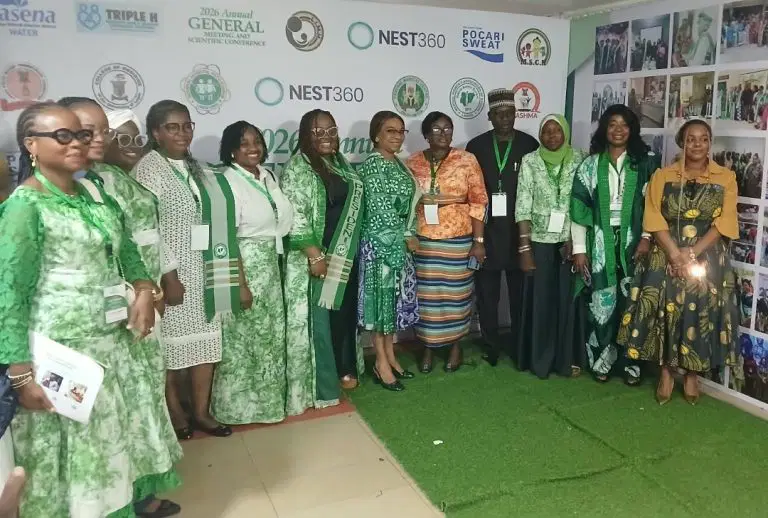
Wright spoke at the 2026 Annual General Meeting (AGM) and Scientific Conference of the Medical Women’s Association of Nigeria (MWAN), Lagos State Branch, where women physicians called for urgent reforms in Nigeria’s healthcare system to stem the rising burden of preventable maternal and child deaths.
Speaking on the theme, “Women Physicians at the Forefront of Health Equity: Advancing Women, Children and Community Health”, Wright challenged female doctors to move beyond clinical practice and take their rightful place in healthcare policy formulation and strategic decision-making.
According to her, United Nations figures showed that approximately 75,000 Nigerian women died from pregnancy and childbirth-related complications in 2023, representing nearly three in every 10 maternal deaths recorded globally.
“That is one woman every seven minutes,” she said, describing the situation as alarming, particularly because many of the deaths were preventable.
Wright, a Professor of Public Health and Community Medicine at the Lagos State University College of Medicine, insisted that women physicians must not limit their contributions to treating patients but should also influence the policies and decisions that determine healthcare delivery.
“Not on the sidelines, not behind, not supporting, but we’re at the front,” she declared, stressing that women doctors must be represented in hospital boards, health committees and other decision-making platforms.
“We deliver most of the care. We must also shape the decisions. It is non-negotiable,” she added.
She said Nigeria’s maternal mortality ratio of an estimated 993 deaths per 100,000 live births was about five times the global average and significantly higher than the Sustainable Development Goal (SDG) target of 70 deaths per 100,000 live births.
The professor expressed concern that despite the presence of some of the country’s best medical facilities in Lagos State, maternal deaths remained unacceptably high, with some communities recording particularly disturbing figures.
According to Wright, the tragedy raised critical questions about the ability of primary healthcare facilities to recognise and manage obstetric emergencies, availability of blood, emergency referral arrangements and access to life-saving treatment.
She said the incident underscored the need for functional referral systems linking primary healthcare centres with secondary and tertiary hospitals.
“Our goal is not just to safely leave you. Our goal is to ensure that everyone who leaves us goes home with her baby or with her babies,” she said.
Wright identified obstetric haemorrhage, hypertensive disorders of pregnancy, sepsis, unsafe abortion-related complications and ruptured uterus among the major causes of preventable maternal deaths.
She also raised concerns about Nigeria’s child health indicators, noting that under-five mortality declined only marginally from 132 deaths per 1,000 live births in 2018 to 110 in 2024.
She described the progress as inadequate, especially against the SDG target of 25 deaths per 1,000 live births.
The professor further disclosed that Nigeria had an estimated 2.2 million zero-dose children in 2025, more than any other country, warning that the figure reflected the failure of the healthcare system to reach millions of vulnerable children with essential immunisation services.
She also highlighted malnutrition, poor access to clean water, household air pollution, adolescent pregnancies and inadequate youth-friendly healthcare services as major challenges affecting vulnerable populations.
According to her, women in low-income settlements, adolescent girls, young mothers, children under five and residents of riverine and peri-urban communities bear a disproportionate burden of healthcare inequalities.
Explaining the difference between equality and equity, Wright said providing the same healthcare resources to everyone did not necessarily guarantee fairness because individuals and communities had different needs and faced different barriers.
“Health is your right. It is not a privilege. It is not a privilege based on your postcode, or based on your purse, or based on your pocket,” she said.
She urged MWAN members to adopt underserved communities, strengthen maternal and child health interventions, support nutrition programmes, promote health insurance and monitor the impact of their interventions.
She also called for improved funding, adequate medical equipment, increased healthcare personnel and better remuneration to address the impact of the migration of Nigerian doctors.
Wright urged female physicians to support younger colleagues through mentorship and professional development, stressing that women must create opportunities for one another rather than compete destructively.
“When women physicians lead, women, children, and communities thrive,” she said.
Earlier, the President of MWAN, Lagos State Branch, Dr Ime Maria Edwin Okon, said the conference provided an opportunity for women physicians to renew their commitment to improving healthcare access and outcomes for women, children and communities.
Okon stressed that women doctors occupied a strategic position in healthcare delivery because they understood the challenges confronting families both as medical professionals and as mothers.
“We are mothers in the land. We understand the health challenges confronting women and children, not only from our professional experiences, but also from our engagement with our families and communities,” she said.
She advocated greater adoption of artificial intelligence, telemedicine, digital health platforms and other technological innovations to improve healthcare delivery, particularly in Lagos, where population growth continues to put pressure on available medical personnel.
The MWAN president also expressed concern over the continued migration of Nigerian doctors, popularly known as the Japa syndrome, urging government to improve hospital infrastructure, equipment and the welfare of medical professionals.
“Support the people that are still here, that have not travelled out, by making sure that infrastructure is very okay,” she said.
She warned that doctors could become frustrated and seek opportunities abroad if their working conditions and welfare needs were not adequately addressed.
Okon also advocated expanded health insurance coverage to reduce out-of-pocket healthcare expenditure, which she identified as a major barrier preventing women, particularly those in rural and underserved communities, from accessing timely medical attention.
On women’s professional advancement, she urged female doctors to embrace technology, continuous learning and leadership opportunities.
“If they don’t give you a seat on the table, bring your seats. You just have to be there to present,” she declared.