























Genetic study identifies DNA repair and cellular protection mechanisms that could advance research into longevity, although scientists say more evidence is needed.
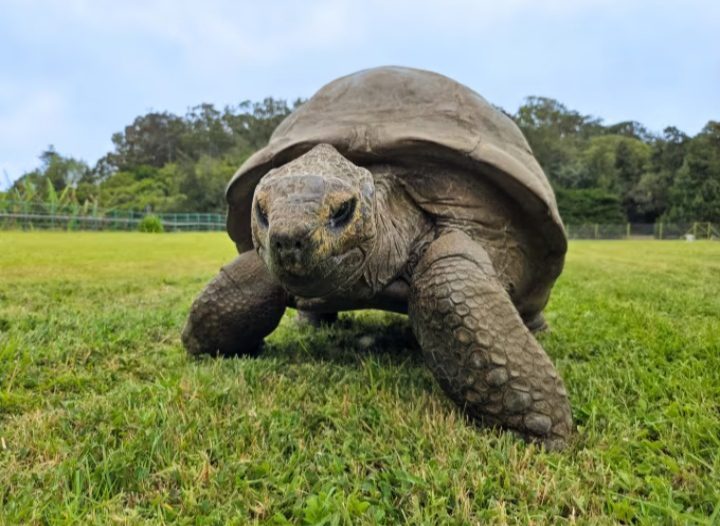
Jonathan, the giant tortoise believed to be about 194 years old, may hold important clues to understanding why some living organisms age more slowly than others, according to a new genetic study.
Researchers who examined the tortoise’s genetic makeup identified variations associated with DNA repair, inflammation control and other biological processes that could help protect cells against age-related damage.
The findings, published in the journal Science Advances, could contribute to future research into human ageing and diseases associated with advancing age. However, scientists caution that further studies are needed before the discoveries can be translated into treatments for humans.
Jonathan, an Aldabra giant tortoise native to the Seychelles, lives on the South Atlantic island of St Helena, a British Overseas Territory. He is widely regarded as the world’s oldest known living land animal.
His precise age remains uncertain. Researchers estimate that he was already an adult when photographed on St Helena in 1882. Since giant tortoises typically take about 50 years to reach adulthood, scientists have used the historical photograph to estimate his current age at approximately 194 years. He could be older.
Genetic protection against ageing
One possible explanation for the exceptional lifespan of giant tortoises is their biology, which may allow them to accumulate cellular damage more slowly than many other animals.
Justin Gerlach, a co-author of the study and a biology fellow at the University of Cambridge, said researchers had long suspected that the animals’ relatively low metabolic rates could influence the ageing process.
The team investigated Jonathan’s genome, which contains his genetic information, alongside his epigenome, the system of chemical modifications that helps regulate how genes are switched on and off.
Their analysis identified 287 genetic variants associated with mechanisms that could protect cells against damage accumulated over time.
According to Gerlach, some of the genetic features were linked to DNA repair and the regulation of inflammation, two biological processes relevant to ageing and disease.
The findings also suggested that Jonathan may retain better control over gene activity than would typically be expected in an animal of such advanced age.
In humans and many other animals, the systems regulating cellular activity can become less reliable as ageing progresses. Such changes can contribute to diseases, including cancer.
Jonathan’s genetic profile, however, appeared to show signs of preserved cellular regulation.
Gerlach said researchers could not yet determine whether these characteristics were unique to Jonathan or common among giant tortoises. Nevertheless, the findings suggest that the animal may have retained aspects of cellular health associated with much younger organisms.
Mitochondria offer another clue
The study also examined Jonathan’s mitochondria, the structures within cells responsible for producing much of the energy they need to function.
Researchers found that these cellular components appeared to be in unexpectedly good condition, raising questions about their possible contribution to the tortoise’s longevity.
Study senior author Stephen Clark, founder of the Nashville-based Kallel Foundation, said the findings were consistent with research suggesting that mitochondrial health may be important in exceptionally long-lived organisms.
Some studies of humans who live beyond 110 years have also reported associations between longevity and more efficient mitochondrial function.
Clark said the team was interested in identifying existing drugs that could improve mitochondrial health and potentially investigating their effects in human clinical trials.
However, the tortoise study does not establish that any particular drug can extend human life. Further research would be required to identify the relevant biological mechanisms, establish safety and demonstrate clinical benefits.
A remarkable survivor
Jonathan’s life also reflects the precarious history of giant tortoises.
During the 18th and 19th centuries, sailors frequently captured giant tortoises from islands in the Indian Ocean and the Pacific, transporting them aboard ships as a source of fresh meat.
The animals could survive for extended periods without food or water, making them convenient provisions for long voyages. The practice contributed to the decline and extinction of some tortoise populations. 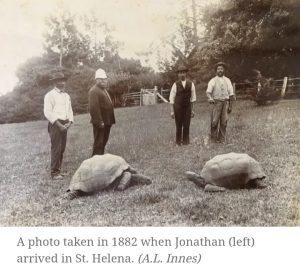
Jonathan’s arrival on St Helena is believed to have been connected to the 19th-century practice of presenting unusual animals to colonial administrators.
He now lives at Plantation House, the official residence of St Helena’s governor, and remains a popular attraction despite having lost his eyesight to cataracts.
Because of his advanced age and the need to minimise infection risks, researchers collected DNA for the study using swabs from his mouth rather than taking blood samples.
The sampling method, however, limited the team’s ability to use some of the more precise DNA-sequencing techniques available.
Researchers compared Jonathan’s genetic and epigenetic information with that of much younger Aldabra giant tortoises from the Seychelles. They also investigated the condition of his mitochondria.
The results offer possible explanations for his extraordinary lifespan, but they do not establish which genetic features are directly responsible for it.
Scientists urge caution
Experts not involved in the research say Jonathan provides a valuable opportunity to investigate the biology of extreme longevity, while emphasising the limitations of drawing conclusions from a single animal.
Joao Pedro de Magalhaes, chair of molecular biogerontology at the University of Birmingham, said understanding why certain species live considerably longer than others could represent a major advance in ageing research, with potential implications for human health.
Handan Melike Dönertaş, a genomics researcher at Middle East Technical University in Türkiye, said comparisons involving more exceptionally long-lived animals and humans could help scientists identify the biological characteristics associated with extended lifespans.
Vincent J. Lynch, a biological sciences professor at the University at Buffalo in the United States, also considered Jonathan an interesting subject for research. However, he raised concerns about the computational methods used to interpret the genetic findings.
He warned that some analytical approaches depend on assumptions about how genes evolve, potentially causing beneficial genetic changes to be misclassified as harmful, or vice versa.
Such concerns highlight the need for independent verification and additional research before the identified genetic variations can be confidently linked to longevity.
Ylenia Chiari, an associate professor at the University of Nottingham who has studied giant tortoise longevity, said the findings add to growing scientific interest in the mechanisms that allow some species to maintain their health over unusually long periods.
She noted that research into long-lived animals could eventually contribute to a better understanding of human ageing and cancer.
More tortoises needed
A major limitation of the study is that it focuses on a single animal. Consequently, researchers cannot yet determine whether Jonathan’s genetic characteristics are typical of Aldabra giant tortoises or reflect an unusual combination of traits unique to him.
Further analysis of other giant tortoises and exceptionally long-lived species will be necessary to establish whether the identified genetic patterns are consistently associated with longer lifespans.
The findings also do not mean that human beings could eventually live for nearly two centuries. Instead, they provide potential avenues for investigating how biological systems maintain cellular health and resist age-related deterioration.
For now, Jonathan remains a remarkable example of longevity in the animal kingdom. His genetic profile may help researchers formulate new questions about ageing, but translating those discoveries into effective human treatments will require considerably more evidence.
•Source acknowledgement: This report has been substantially rewritten and adapted from an article by Jacopo Prisco, originally published by CNN Science under the headline “Jonathan the 194-year-old tortoise could help humans live longer.” The underlying research was published in the journal Science Advances.