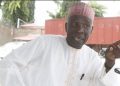



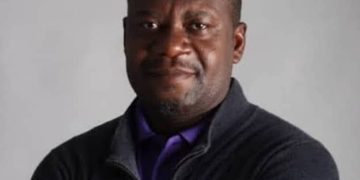













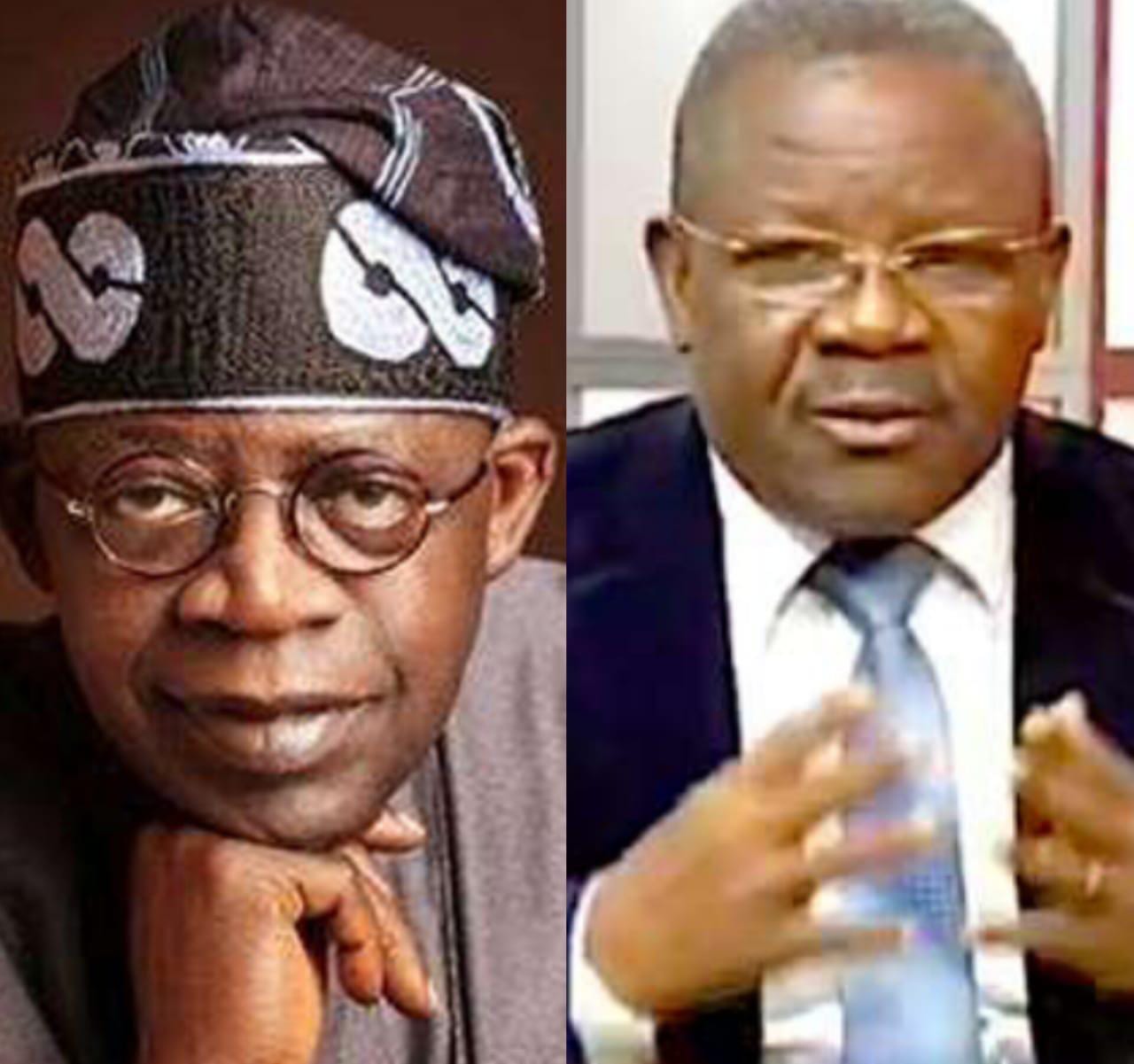
A professor and retired naval officer, Commodore Kunle Olawunmi, has warned that the 2027 presidential election could expose the Yoruba people to an unnecessary political dilemma if President Bola Ahmed Tinubu’s administration continues to be interpreted through an ethnic lens.
Olawunmi argued that neither Tinubu’s possible re-election nor his defeat should determine the political security and future of the Yoruba, insisting that the President’s policies, appointments and performance must be judged as those of a Federal Government rather than as a collective project of the Yoruba people.
In a wide-ranging intervention on Nigeria’s political future, Olawunmi said the increasing tendency to associate Tinubu’s presidency with the Yoruba nation could leave millions of Yoruba people bearing the consequences of decisions they neither made nor controlled.
According to him, the situation presents a dangerous paradox.
“If President Tinubu wins, the actions and failures of his government may increasingly be presented as the collective project of the Yoruba. If he loses, the Yoruba may be exposed to political retaliation by interests that treat his presidency as an ethnic conquest,” he argued.
Olawunmi stressed that Tinubu, although a Yoruba man, could not be equated with the Yoruba nation, warning against a political culture in which the fortunes of an entire ethnic nationality become tied to the success or failure of an individual politician.
He said the Yoruba should neither defend policies they considered harmful merely because the President shared their ancestry nor accept collective responsibility for decisions over which ordinary citizens had little or no influence.
*Appointments, hardship and the politics of collective blame*
The professor identified the controversy surrounding federal appointments as one of the issues capable of deepening the ethnicisation of the Tinubu presidency.
He noted that criticisms had emerged, including from individuals within the governing political establishment, over what critics described as the concentration of strategic appointments around the President’s political and ethnic network.
While acknowledging that the Presidency had rejected allegations that its appointments breached the constitutional principle of federal character, Olawunmi argued that the political consequences of the controversy extended beyond the question of whether individual appointments were legally or constitutionally defensible.
His concern, he said, was that perceived benefits accruing to a limited political circle could eventually be interpreted as benefits accruing to the Yoruba as a whole.
“Private advantage for a few can therefore become public danger for millions,” he warned.
He made a similar argument concerning the administration’s economic policies, particularly the removal of petrol subsidy and the liberalisation of the foreign exchange regime.
While the policies were introduced as structural reforms intended to address longstanding economic distortions, Olawunmi observed that their implementation had coincided with severe pressure on households and businesses.
Whatever the merits or failures of the reforms, he maintained, they remained decisions of the Federal Government and should not be regarded as decisions taken by the Yoruba people.
The danger, he argued, lies in the tendency of Nigerian politics to transform the actions of individual officeholders into the presumed actions of their ethnic communities.
*‘Tinubu is Yoruba, but he is not the Yoruba nation’*
At the heart of Olawunmi’s argument is a distinction between ethnic identity and political responsibility.
He maintained that the Yoruba should reject attempts to make them collectively responsible for the Tinubu administration, just as they should resist the temptation to regard the President’s political survival as synonymous with their own survival.
“Bola Tinubu is a Yoruba man, but he is not the Yoruba nation,” he declared.
For Olawunmi, the larger challenge is to create a political system in which governments can be held accountable directly for their decisions, rather than one in which citizens are encouraged to see presidential contests as battles for ethnic survival.
He contended that the present federal arrangement had failed to adequately establish that connection between power and responsibility.
According to him, state governments are frequently blamed for insecurity even though the police remain substantially under federal control, while states and regions face restrictions and prolonged negotiations in exercising authority over matters central to their development.
He also questioned a revenue-sharing system in which revenues are pooled and redistributed, arguing that it could weaken the relationship between taxation, performance and accountability.
The result, he said, is a governance structure in which different levels of government can shift responsibility to one another whenever citizens demand explanations for failure.
*From federal contest to Yoruba self-determination*
Olawunmi consequently advanced a more fundamental proposition: that the Yoruba should begin a serious, structured and democratic conversation about self-determination.
He argued that the Yoruba constitute a historic national community with a shared linguistic and cultural heritage, a substantial population, an identifiable territorial base, established urban centres, educational institutions, commercial networks, professional capacity and a long history of organised political authority.
He acknowledged the internal diversity of Yoruba society but maintained that such diversity did not invalidate the concept of nationhood.
The critical question, he argued, should not be whether a people are completely homogeneous, but whether they possess a sustained collective identity, territorial base, institutional capacity and the political will to determine their future.
Olawunmi said the first three conditions already existed among the Yoruba, while the fourth—political will—would have to emerge through democratic processes.
He presented self-determination not as an argument for Yoruba superiority or hostility towards other Nigerians, but as a question of accountable government.
“A sovereign Yoruba state would place final political responsibility closer to the people who must live with its consequences,” he argued.
Such an arrangement, he said, could give the Yoruba greater control over security institutions, economic priorities, education, public administration and external relations.
*1993 election still carries a lesson*
Olawunmi also invoked the annulled June 12, 1993 presidential election as a historical warning.
He argued that the election, in which Moshood Kashimawo Abiola secured support across ethnic, regional and religious boundaries, demonstrated that broad national political acceptance could still be overturned when political power was placed above electoral consent.
For him, the lesson of 1993 should not be used to perpetuate hatred or permanent hostility towards other Nigerian groups.
Rather, he said, it should encourage the Yoruba to recognise that participation in Nigeria’s federal political contest does not, by itself, guarantee that their democratic mandate, security or long-term interests will always be protected.
The 2027 election, he suggested, should therefore not become another referendum on whether the Yoruba are politically safe only when a Yoruba occupies Aso Rock.
“If the political safety of the Yoruba rises when one Yoruba candidate wins and falls when he loses, then the federation has failed to create equal citizenship.
Presidency is temporary. Nationhood is intergenerational.”
*No shortcut to independence*
Olawunmi, however, cautioned that the demand for self-determination could not be achieved through declarations, emotional mobilisation or violence.
He acknowledged that Nigeria’s Constitution presently declares the federation indivisible and does not provide a straightforward procedure for unilateral secession.
He also recognised that while international law affirms the principle of self-determination, it does not automatically confer on every national community an unrestricted right to break away from an existing sovereign state.
Consequently, he advocated a peaceful, democratic and negotiated process.
He proposed the establishment of a representative Yoruba self-determination congress involving the six South-West states, Yoruba communities outside the region and a broad spectrum of society, including women, young people, traditional rulers, professionals, organised labour, businesses, religious organisations and non-Yoruba residents of the region.
Such a body, he said, must operate transparently and must not allow any individual or organisation to claim permanent ownership of the Yoruba political voice.
*Call for referendum*
Olawunmi further proposed that the movement should eventually seek an authorised referendum on the constitutional future of the Yoruba people.
But he stressed that such a referendum must be based on clearly established rules covering the electorate, territory, voting procedures and mechanisms for resolving disputes.
Support for independence, he said, should not be inferred from political rallies, social media campaigns or unverified opinion polls. Instead, there must be a verifiable democratic mandate.
He also called for constitutional engagement within Nigeria, arguing that advocates of self-determination could not speak exclusively to Yoruba audiences if their objective was to achieve a peaceful and lawful political settlement.
He pointed to the demanding procedures for constitutional alteration under Section 9 of the Nigerian Constitution as evidence that the process would require sustained engagement with the National Assembly, state legislatures and the wider Nigerian public.
The professor said any proposed settlement should also guarantee continued trade, transit, security cooperation and protection for citizens living on either side of any eventual political boundary.
*‘No armed wing, no ethnic intimidation’*
Perhaps most significantly, Olawunmi insisted that any self-determination movement must be firmly rooted in non-violence.
He rejected the idea of an armed wing or any attempt to intimidate people on ethnic grounds.
He also opposed forced compliance and attacks against Nigerians living in Yorubaland, arguing that a movement seeking freedom must demonstrate that it is capable of protecting the rights of minorities and non-indigenes.
“A movement claiming freedom must demonstrate in its conduct that it can be trusted with power,” he said.
He equally urged Yoruba politicians seeking elective office to disclose their positions on the question of self-determination and, where they support it, pursue the issue through lawful legislative and political channels.
*Beyond Tinubu and 2027*
Olawunmi was emphatic that his argument should not be interpreted as either a campaign to rescue Tinubu or an attempt to punish him politically.
He said the Yoruba question should be considered beyond the immediate fortunes of the President and the 2027 election.
According to him, Tinubu would eventually leave office either through electoral defeat or the completion of his constitutional tenure, but the Yoruba people would remain.
He therefore urged Yoruba leaders to stop building their collective political strategy around access to the presidency.
He also called on President Tinubu to recognise the dangers inherent in allowing federal power to become identified with his personal and ethnic political network.
The President, he said, should uphold the principle of federal character, protect competitive democracy and recognise peaceful advocacy for self-determination as a political issue that should be addressed through dialogue rather than repression.
For Olawunmi, repression would not eliminate the demand for self-determination; instead, it could strengthen the argument of those who believe that the existing political structure does not adequately accommodate the aspirations of the Yoruba.
‘The time is before the next crisis’
The professor’s intervention ultimately shifts the conversation from the immediate question of who wins the 2027 presidential election to a broader debate about the constitutional future of the Yoruba and the nature of Nigeria’s federal system.
He argued that the Yoruba should not wait for another political crisis before organising, just as they should not confuse the electoral victory of an individual politician with the security of an entire people.
“The time to establish a democratic mandate is before the next crisis, while dialogue remains possible,” he said.
Olawunmi maintained that the Yoruba could pursue self-determination without embracing hostility towards Nigeria or other nationalities.
His proposed model, he said, is one based on consent, law, negotiation and peaceful coexistence, with continued friendship, commerce and mutual respect between the Yoruba and other peoples of Nigeria.
The central proposition, therefore, is that the Yoruba’s future should not depend on the occupant of Aso Rock.
“Tinubu will one day leave office, whether through election or the completion of his constitutional tenure. The Yoruba people will remain,” Olawunmi said.
“Their future must be secured by institutions and democratic consent, not by the uncertain protection of one presidency.”
*Commodore Kunle Olawunmi, a professor, lives in Abeokuta.*