

















By Our Reporter
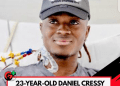
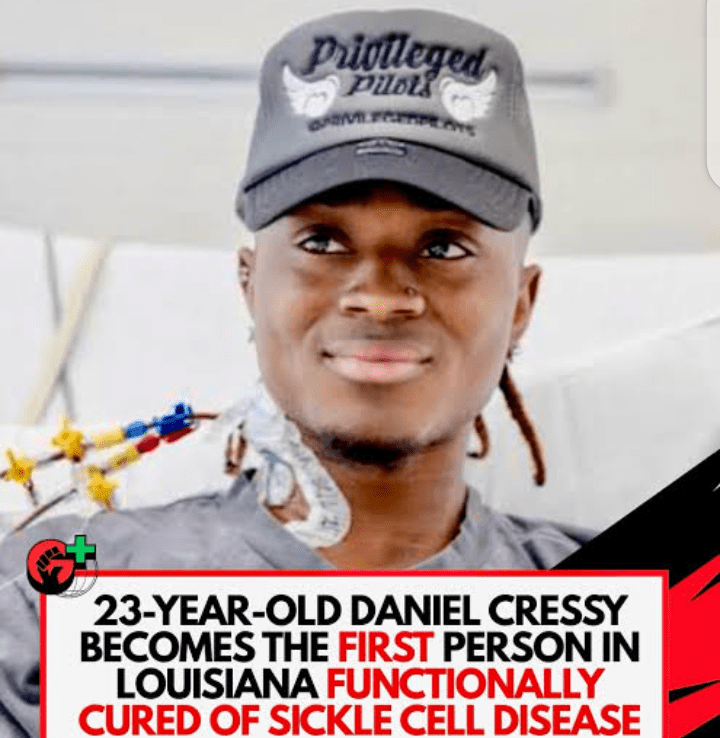
For most of his life, Daniel Cressy looked up at airplanes with a dream that seemed forever out of reach. Born with sickle cell disease, the 23-year-old from Metairie, Louisiana, spent years battling a genetic blood disorder that brought chronic health challenges and stood between him and his ambition of becoming a commercial airline pilot. Federal aviation regulations made it unlikely he would ever receive a pilot’s license while living with the condition.
Today, that dream is back on the runway. Cressy has become the first person in Louisiana’s Gulf Coast region to be functionally cured of sickle cell disease through a groundbreaking gene-editing treatment, marking a medical milestone that is transforming not only his health but also his future.
On Monday, surrounded by family, friends, doctors and elected officials at Manning Family Children’s Hospital in New Orleans, Cressy rang a ceremonial bell to celebrate the end of a journey that took two years and the beginning of what he calls “life two.”
“While many spend their lives searching for purpose, mine found me,” Cressy said. “Now, instead of looking for meaning, I can spend my life fulfilling it.”
For Cressy, the cure means more than freedom from painful symptoms. It means reclaiming a future he once feared was impossible.
Growing up, he dreamed of flying commercial jets. But sickle cell disease — a hereditary blood disorder that disproportionately affects African Americans and can lead to severe pain, organ damage and shortened life expectancy — threatened to keep him grounded permanently.
When he learned that the Federal Aviation Administration could potentially allow him to pursue a pilot’s license if he was cured, Cressy began exploring options. His search led him to gene-editing therapy using CRISPR technology, one of the most advanced medical treatments available today.
The process was long and demanding. Doctors collected stem cells from his body and sent them to Scotland, where they were genetically modified. After the cells were returned to New Orleans, Cressy underwent chemotherapy to eliminate the diseased cells in his bone marrow before receiving the edited cells through an infusion.
He spent a month recovering under close medical supervision.
Then came the moment he had been waiting for.
Doctors declared him functionally cured of sickle cell disease, making him the first patient in the region to achieve that outcome through Casgevy’s CRISPR/Cas9 gene-editing therapy.
His achievement carries significance beyond his personal victory. Louisiana records some of the highest rates of sickle cell disease in the United States, giving hope to countless families affected by the condition.
Hospital leaders described the milestone as transformational. “Curative gene therapy is restoring futures, and Daniel has paved the way for what is possible together with his care team,” hospital CEO Lucio Fragoso said.
Yet Cressy’s focus remains fixed on the horizon.
Even before completing treatment, he was planning his next chapter — working toward a commercial aviation career, writing a book titled Blessing in the Skies, and expanding his nonprofit organization, the Privileged Pilots Project, which aims to help people facing medical, economic and social barriers access opportunities in aviation and beyond.
For a young man once told that his illness could keep him from the cockpit, the future now looks remarkably different.
The disease that threatened to limit his life has become part of the story that lifted him higher.
And as Daniel Cressy prepares for the next phase of his journey, the dream that once seemed impossible is finally within reach — not just to watch planes soar through the clouds, but to fly them himself.