


















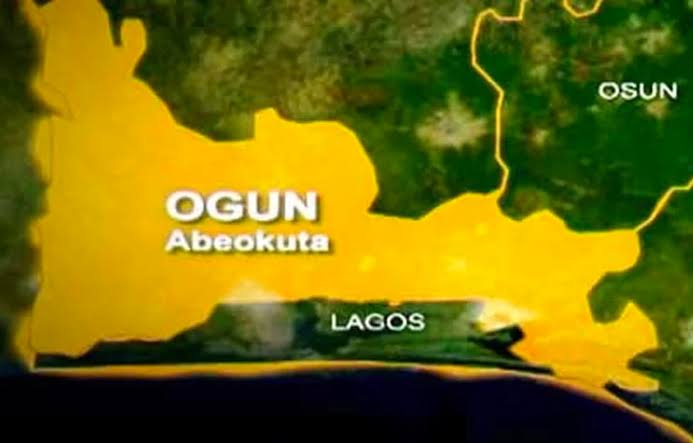
Ogun deserves a government that can explain where its money has gone, what its borrowing has achieved and how its policies have improved the lives of ordinary citizens
By Dayo Olufemi
*”₦538.9bn debt, ₦341.62bn deficit, mounting liabilities and struggling public infrastructure, after eight years of APC administration, Ogun people deserve answers, not another round of empty promises.”*
There is a question Ogun people must ask ahead of 2027 and that is, Continuity of what, exactly?
Continuity of mounting debts, deteriorating roads, struggling hospitals, inadequate public water supply and a government whose financial records appear increasingly disconnected from the everyday realities of its people?
Ogun State cannot reasonably claim to lack resources. It generates substantial internally generated revenue, receives federal allocations and has continued to access borrowing facilities. Yet, the impact of these resources remains difficult to reconcile with the condition of public infrastructure and essential services across the state.
The latest BudgIT State of States Report 2026 presents a particularly concerning picture. The report, which assessed state fiscal performance for 2025, puts Ogun’s total debt at approximately ₦538.92 billion, making it the fourth most indebted state in Nigeria. Its debt increased from ₦282.30 billion in 2021, representing approximately 90.9 per cent growth in five years.
Even more troubling, Ogun ranked 31st in overall fiscal performance and 32nd in debt sustainability.
These figures raise fundamental questions about the state’s borrowing strategy, expenditure priorities and ability to translate public resources into meaningful development.
THE ₦341.62 BILLION QUESTION
Perhaps the most disturbing revelation is the widening gap between Ogun’s revenue and expenditure.
According to BudgIT, the state generated total revenue of ₦510.88 billion in 2025, including ₦238.50 billion in internally generated revenue. Its gross FAAC allocation stood at ₦203.73 billion.
Despite these substantial inflows, total expenditure rose to ₦852.50 billion, representing a 43.7 per cent increase from the previous year.
The result was a staggering fiscal deficit of ₦341.62 billion.
In simple terms, Ogun spent approximately ₦1.67 for every ₦1 it generated in revenue.
How does a state with such considerable revenue-generating capacity find itself in this position?
The report further revealed that contractor obligations, pension and gratuity arrears and other liabilities amounted to ₦176.17 billion. This comprises ₦97.91 billion owed in contractor obligations, ₦69.95 billion in pension and gratuity arrears and ₦8.31 billion in other liabilities.
Behind these figures are businesses waiting for government payments, retired workers awaiting their entitlements and future administrations inheriting substantial financial obligations.
The issue is not whether borrowing is inherently wrong. Governments borrow to finance development. The real question is whether the money borrowed and the revenue generated have produced sufficient, measurable benefits for the people.
WHERE IS THE DEVELOPMENT?
Ogun’s financial profile becomes more difficult to understand when considered alongside the condition of public infrastructure.
Roads remain a major concern across several communities. Residents continue to contend with neglected roads, potholes, deteriorating surfaces and projects that fail to withstand the test of time.
The issue is not how many kilometres of roads government announces it has constructed. It is whether those roads meet acceptable engineering standards, whether contractors are properly supervised and whether the projects deliver lasting value.
A road that deteriorates shortly after construction is not sustainable development, it is another financial burden.
Healthcare is another area demanding serious attention. Public hospitals need better equipment, adequate staffing, functional emergency services and improved facilities. When accidents occur, citizens should not have to depend on luck or private arrangements to receive emergency attention.
The state’s own 2024 Citizens’ Accountability Report recorded zero expenditure on the proposed procurement of 20 ambulances, despite a revised allocation of approximately ₦207.96 million. The electronic medical records project also recorded zero expenditure.
These historical figures raise legitimate questions about implementation and priorities.
Water supply is equally troubling. Many communities have become dependent on privately drilled boreholes because reliable pipe-borne water is unavailable. Residents must spend their own money to secure a basic necessity, while navigating government permits and associated charges.
What happened to the state’s investments in public water infrastructure? Why should access to clean water remain such a challenge in a state with Ogun’s revenue profile?
THE NYSC CAMP INCIDENT, ANOTHER QUESTION OF PREPAREDNESS
The recent images from the NYSC Orientation Camp in Sagamu have brought public infrastructure and planning into sharper focus.
Prospective corps members were seen sleeping in an overcrowded multipurpose hall, with mattresses spread closely together on the floor and little room for movement.
The question is no longer simply who wants to govern Ogun. It is what kind of governance the people deserve and what evidence those seeking power can present to justify their promises
The government explained that the camp received more than 4,300 prospective corps members, compared with slightly over 2,000 in previous batches. It described the arrangement as temporary, explaining that registration and hostel allocation were handled by NYSC officials. The state also disclosed that it provided 500 mattresses, while the Akarigbo donated another 300.
These interventions and explanations deserve acknowledgement. However, they do not remove the larger question of preparedness and the adequacy of facilities.
Even where operational responsibilities rest with NYSC, the welfare of young Nigerians deployed to Ogun should be a shared concern.
For a state that prides itself on its educational institutions and economic importance, the incident is an uncomfortable reminder that public facilities must be planned and maintained to accommodate the people they are meant to serve.
Young graduates arriving for national service deserve dignity, not emergency accommodation arrangements that expose the limitations of existing infrastructure.
CAPITAL EXPENDITURE, THE FIGURES MUST TRANSLATE INTO RESULTS
To be fair, BudgIT recorded a significant increase in Ogun’s capital expenditure, which rose from ₦150 billion in 2024 to ₦337.21 billion in 2025.
That is an increase of approximately 124.8 per cent.
But this raises another important question, what exactly did the ₦337.21 billion deliver?
How many roads were completed and remain in good condition? How many hospitals were upgraded and equipped? Which communities now enjoy reliable water supply? What improvements can residents identify in public schools and other essential infrastructure?
Capital expenditure figures are important, but they do not automatically establish project completion, quality or public benefit.
The government must publish verifiable details of the projects financed, their locations, costs, contractors, completion status and measurable impact.
The people deserve to see the results of public spending, not just impressive figures in financial reports.
CONTINUITY, WHAT EXACTLY IS THE APC ASKING OGUN PEOPLE TO CONTINUE?
This is where the political conversation becomes unavoidable.
The APC has governed Ogun State under Governor Dapo Abiodun since 2019. As the administration approaches the end of its second term, the public deserves an honest assessment of its record.
Continuity is not automatically a virtue. It must be justified by performance.
What exactly should residents expect to improve if the same political establishment retains control? What lessons have been learnt from the growing debt profile, the fiscal deficit, outstanding liabilities and persistent public infrastructure concerns?
A political party cannot enjoy eight years in government, benefit from public revenue and borrowing and then present continuity as an achievement in itself.
The argument for continuity must be supported by measurable improvements in people’s lives.
It must account for the roads that have been built and maintained, the hospitals that have become better equipped, the communities that now enjoy reliable water supply, the schools that have improved and the economic opportunities created for young people.
It must also address the financial obligations being transferred to future administrations.
The controversy surrounding the APC’s emerging governorship succession politics makes public scrutiny even more important. Anyone seeking to inherit the state’s leadership must be prepared to answer questions about their own record, public controversies and plans for addressing the state’s challenges. There can be no substitute for transparency and accountability.
It is quite worrisome that the person being put forward is shrouded in various controversies, identity crisis and allegations of fraud. Indeed, those who brought Nigeria to its knees can not claim to be the Messiah for Ogun State.
OGUN PEOPLE DESERVE MORE THAN ANOTHER EIGHT YEARS OF PROMISES
There is something particularly troubling about a government approaching the end of eight years while residents continue to raise concerns about basic public services.
A government must be judged not merely by the projects it announces but by the quality, durability and reach of what it delivers.
It must be judged by whether the average household is better off, whether healthcare is accessible, whether roads are safe, whether clean water is available and whether young people can find opportunities within their communities.
Ogun is blessed with enormous economic potential, industrial opportunities and human resources. It cannot afford a governance culture in which borrowing increases, financial obligations accumulate and citizens continue to struggle with basic infrastructure.
Every naira borrowed must have a purpose. Every allocation received must be accounted for. Every project awarded must be properly executed.
The 2027 political conversation must therefore go beyond campaign posters, endorsements, political gatherings and carefully packaged achievements. It must be about accountability, verifiable performance and credible alternatives.
Eight years is a considerable period to demonstrate what a government can do. The people should not be asked to embrace continuity without first examining the results of the last eight years.
Ogun deserves a government that can explain where its money has gone, what its borrowing has achieved and how its policies have improved the lives of ordinary citizens.
The future of the state cannot be built on slogans while the foundations of public service remain under pressure.
The question is no longer simply who wants to govern Ogun. It is what kind of governance the people deserve and what evidence those seeking power can present to justify their promises.
•Dayo Olufemi writes from Abeokuta South Local Government
•Opinions, positions or thoughts expressed here are personal and strictly those of the writer/author and do not represent the views of The Daily Crucible.