
















Ogun State Government has reaffirmed its determination to prioritise projects that advance socio-economic growth in line with the ISEYA agenda, keep recurrent expenditure and debt obligations manageable, and give all ongoing projects a realistic funding and completion plan.
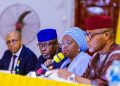
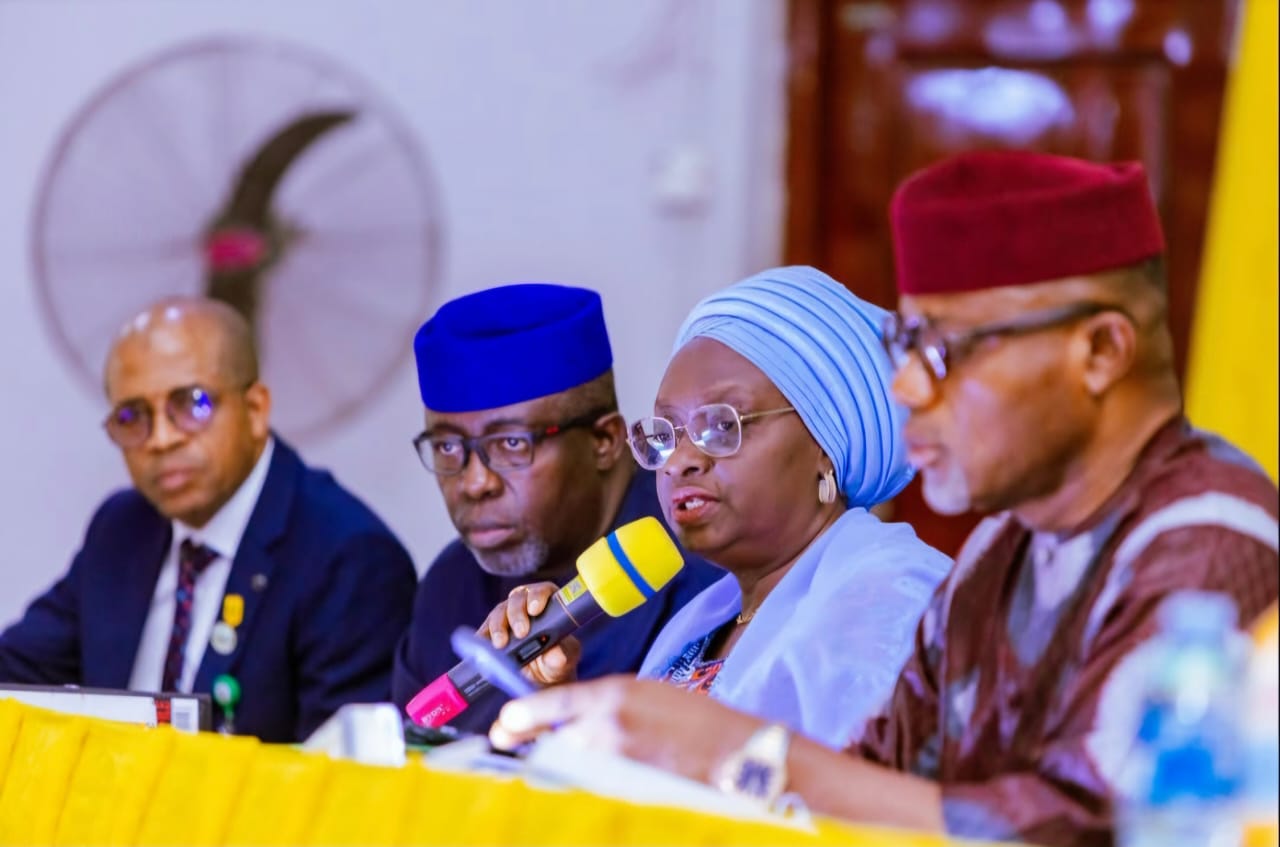
Governor Dapo Abiodun who was represented by his Deputy, Engr. Noimot Salako-Oyedele, stated this known in his address at the Treasury Board Meeting on the 2027-2029 Medium Term Expenditure Framework and the 2027 Budget, held at the Obas’ Complex, Oke-Mosan, Abeokuta.
The Governor said the meeting reflected his administration’s commitment to institutional reforms, fiscal transparency, participatory governance and evidence-based planning, shaped by citizens’ and stakeholders’ voices at the town hall consultations held recently across the four divisions of the State.
“As this is the final budget cycle of our administration, the 2027 budget is a transition budget. We must consolidate our gains, advance priority projects, maintain sound financial management and leave the State in good order for the incoming administration,” he said.
He noted that the State must avoid unfunded commitments, account clearly for standing obligations and keep its development ambitions within available resources, adding that in doing so, his government would leave behind capable institutions, stronger finances and reforms capable of delivering feasible results for the people of the State.
“Our Medium Term Revenue Strategy has given us reliable data and the result has been encouraging. The State’s IGR has grown from about N52 billion in 2020 to N238.5 billion in 2025, and N259.52 billion has been recorded as at October 2026.
“As we do this, we will continue to reduce our dependence on federal allocation through IGR and ensure that every naira is spent efficiently in all we do. Together, these measures will help us cushion the effect of prevailing macro-economic headwinds and inflation while protecting essential services and productive investment,” Abiodun explained.
While saying his administration’s continued investment in strategic infrastructure had enhanced the State’s competitiveness and unlocked new avenues for economic prosperity, he explained that landmark projects such as the Gateway International Airport, Iperu; Kajola and Ijebu-Ode Inland Dry Ports; the upcoming $7 billion Ogun Blue Marine Special Processing Zone; the Deep Sea Port in Ogun Waterside Local Government Area; and the proposed $10 billion Olokola Liquefied Natural Gas project, would improve connectivity, lower logistics costs, increase energy availability, attract private and foreign investment, widen the tax base and boost IGR.
His words: “Our transport network and economy will be strengthened by four major Federal Government road projects: the 700km Lagos-Calabar Coastal Highway, with its 28km Ogun section due for completion by the end of the year; the 1,068km Sokoto-Badagry Super Highway, with its 162km section running through Ogun State; the reconstruction and dualisation of the Ibadan-Ijebu-Ode Road; and the Sagamu-Ijebu-Ode-Benin Expressway, which will together improve inland and coastal connectivity, cut travel time and cost, and open up new trade, investment and industrial opportunities.”
He added that with targeted ICT and digital training, his administration would equip youths across the State with practical and marketable skills for employment, enterprise and self-reliance, while building the human capital needed to drive innovation and productivity, pointing out that over N9 billion had been disbursed to 203,000 individuals across all four divisions of the State for women empowerment and economic initiatives.
Speaking on efforts to boost productivity and food security, the State helmsman revealed that his administration had provided 10 tractors and other modern equipment for modern farming and rehabilitated processing facilities across the eight farm settlements in the State, supplied fertilisers and seedlings to 3,200 farmers for the wet season and 8,208 for the dry season, as well as 1,200 android phones with which farmers could monitor climate change.
Ministries, Departments and Agencies of government later took turns to present their 2027 budget proposals.
Also speaking, the Chief Economic Adviser and Commissioner for Finance, Mr. Dapo Okubadejo, said the State had been able to achieve budget discipline under the leadership of Governor Abiodun. He highlighted the establishment of the Bureau of Public Procurement and the strengthening of the Debt Management Office as some of the policies that had aided good budget implementation.
He described the Treasury Board Meeting as an opportunity to deliberate on the consolidation of the gains recorded by the current administration, with a view to laying a strong foundation for the incoming government.