












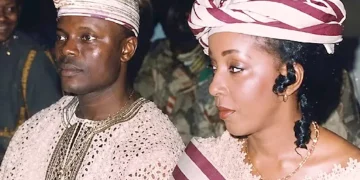









Award-winning Nigerian novelist Chimamanda Ngozi Adichie says the death of her 21-month-old son, Nkanu, has profoundly altered her relationship with Nigeria, revealing that she no longer wants to return to the country.
Adichie made the disclosure in an interview with The New York Times, where she spoke about the loss of her son and its emotional impact on her connection to her home country.
Asked whether Nigeria still held the same place in her heart, the author gave a stark response.
“My feelings toward Nigeria have changed.”
She added: “I do not want to go back to Nigeria.”
Nkanu, one of Adichie’s twin sons, died in December 2025 after a medical emergency at Euracare, a private hospital in Nigeria.
According to Adichie, the child initially developed a fever and was placed on antibiotics by her husband, Ivara Esege. When his condition failed to improve, the couple took him to the hospital for further medical assessment.
She said Nkanu was later sedated with propofol while undergoing an MRI scan. He subsequently suffered cardiac arrest and died the following day.
Adichie recalled that, shortly after the procedure, a doctor approached her in an apparently distressed state and told her that her son had received an excessive dose of propofol.
“Well, look, they gave him too much Propofol.”
Adichie said the doctor’s words have remained etched in her memory.
In June, the novelist publicly alleged that medical negligence played a role in her son’s death and questioned the treatment he received at the hospital.
The circumstances surrounding Nkanu’s death are now being examined through a coroner’s inquest. The proceedings have reportedly been marked by delays and disagreements between the family and Euracare.
The hospital has also reportedly accused Adichie and Esege of destroying potential evidence by cremating their son’s remains, an issue that has become part of the dispute surrounding the inquest.
Adichie and her husband have called for reforms in Nigeria’s healthcare system. They have not, however, filed a lawsuit against the hospital, according to The New York Times report.
Despite her decision to distance herself from Nigeria, Adichie said her children could ultimately influence whether she returns.
She noted that her daughter continues to regard Nigeria as her “happy place.”
Before Nkanu’s death, Adichie said Nigeria was inseparable from her identity and her development as a writer. She described the country as the place that gave her “everything” she needed to become an author.
But the death of her son, she said, has fundamentally changed that relationship.
Reflecting on the tragedy, Adichie said the experience still feels unreal.
“I mean, it is so surreal, all of this. I still can’t believe we’re talking about my son who died.”
She added: “You’re going through something, but you also feel like you’re outside of it.”