























Lecturer Olufemi Oloyede, a Professor of Fetal Medicine in the Department of Obstetrics and Gynaecology at Olabisi Onabanjo University(OOU), Ago-Iwoye, Ogun State, has called for a review of Nigeria’s abortion laws, saying the current legal framework should be reconsidered in light of couples’ reproductive choices and advances in prenatal diagnosis.
Oloyede said, findings revealed that some couples expressed support for pregnancy termination after a fetus was diagnosed with haemoglobin SS (HbSS), among other serious genetic conditions.
The academic urged policymakers and stakeholders to promote a balanced legal and ethical framework that protects maternal health while recognising the complex decisions families face following prenatal diagnoses
He said that, given the plight of Nigerian children born with congenital abnormalities, the heavy burden of care on their families, and the state’s lack of preparedness to adequately care for such children, the time had come for laws to allow for the termination of fetuses with conditions that would “adversely compromise quality of life and living.”
He also advocated the establishment of a multidisciplinary committee comprising experts from different fields to evaluate and authenticate requests for termination of pregnancy, prevent abuse of abortion laws, and provide support to families navigating complex prenatal diagnoses.
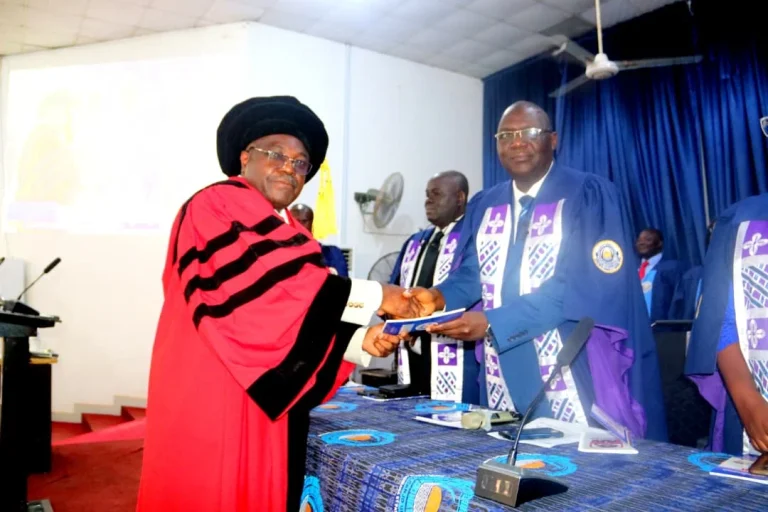
The calls formed parts of his recommendations while delivering the university’s 130th inaugural lecture, titled “To Live or Not to Live: Navigating Ethical Dilemmas in Fetal Medicine,” on Tuesday.
According to him, every pregnancy involves complex processes within the womb that may raise difficult medical and ethical questions about whether a pregnancy should continue.
“Number one is that for every child that is delivered, there have been serious issues going on within the womb. The child has been undergoing a lot of things that are not known to the whole world,” he said.
He explained that some of these developments could raise questions about whether a pregnancy should continue, adding that doctors, families and society must consider the challenges involved in making such decisions.
Oloyede also warned expectant mothers against exposing their pregnancies to factors that could cause fetal abnormalities.
He identified the use of unprescribed medications, exposure to harmful substances such as radiation and certain infections as some of the factors that could result in fetal malformations.
“Mothers are advised very strongly to avoid taking unprescribed medication and exposing themselves or their pregnancies to radiation and all the rest,” he said.
The professor further argued that Nigeria needs to develop a stronger ethical and legal framework around fetal medicine, insisting that the fetus should be recognised in discussions surrounding abortion.
He noted that existing abortion laws, as he understands them, have traditionally focused primarily on the interests of the mother.
“Before now, abortion laws are strictly maternal interest. ‘In the interest of the mother’—that’s what the abortion law says. No abortion law has said ‘in the interest of the fetus,’” he said.
Oloyede therefore urged the government and other stakeholders to begin considering fetal interests in the country’s abortion laws, particularly in cases involving severe fetal abnormalities and conditions that could result in significant suffering.
“The fetus never begged to come, and if the fetus is going to be challenged by something, we should give them that opportunity or right to exit in a painless manner,” he said.
He argued that pregnancies involving severe fetal abnormalities should be part of the broader discussion on abortion law reform.
“Malformed fetuses should be allowed to be terminated. Fetuses that will become a burden to themselves should be included in the abortion laws,” he said.
The professor also mentioned Down syndrome as one of the conditions that, in his view, should be considered in the debate, particularly where affected children may face significant challenges and society lacks adequate systems to support them.
He also identified Hemoglobin SS as one of the conditions that could warrant consideration for termination, even though the issue often evokes high level of controversy.
“Sickle cell inclusive. Very controversial, very controversial,” he said.
He said religious beliefs, personal convictions and societal sentiments often influence how people respond to the condition.
“The danger in sickle cell is this: because of religious, personal bias, we say sentiments—we say, ‘Leave them, God is in control.’ But I tell you, no,” he said.
Oloyede argued that the decision should also take into account the ability of society and families to provide adequate care for children living with sickle cell disease.
He cited recurrent severe pain, blood transfusions, school absenteeism and premature deaths among the challenges faced by some people living with the condition.
“Until society gets to that level where they can take care of sickle cell babies, until they are ready to assume that responsibility, if they are not, they should not allow these babies to be delivered, keep suffering excruciating pains, recurrent transfusions, absences from schools, and all the rest,” he said.
However, he stressed that where adequate medical and social support is available, children with sickle cell disease should be allowed to live.
“Where a baby or a child can have access to these things, it’s okay, they can still live. But where they don’t, which is the situation for the majority of affected babies, they should consider it,” he said.
Oloyede also emphasised that any discussion of abortion as it relates to genetic or fetal conditions should not replace efforts to prevent and manage such conditions.
He called for continued public awareness and other interventions, saying Nigeria must continue working towards a society capable of providing appropriate care and support for affected children and families.
He said, “The perceived ambiguity in the subsisting abortion laws is long overdue for a comprehensive review and informed interpretation. This is necessary if we must support the families we manage and protect the physicians when they navigate the complexities of management decisions.
“The legislative arm of government should review the Criminal and Penal Codes to include common aneuploidy in the fetus, namely Trisomy 13(Patua syndrome), 18(Edward syndrome) and 21(Down syndrome) because of the frequent association with severe structural abnormalities, mental retardation and severely impaired cognitive function in few survivors.
“The quality of life of few survivors is usually poor and often requires substantial financial cost to manage in Nigeria, the state has not demonstrated convincing interest in this group of people.
“Another condition is the monogenic disorder especially sickle cell anaemia (SCA) which takes heavy toll on family financial purse, with associated stigmatisation and recurrent ill health that might cause sudden death. Over 97% of our couples responded positively to having a termination if the fetus is hemoglobin SS. The option left open to this group is clandestine termination of pregnancy with its attendant consequences.”