





















By Jane Okafor, Abuja
The Federal Government on Monday dismissed claims that President Bola Ahmed Tinubu’s administration borrowed about ₦80 trillion in the last three years, insisting that the country’s current debt profile has been exaggerated by currency revaluation, accounting adjustments and widespread misunderstanding.
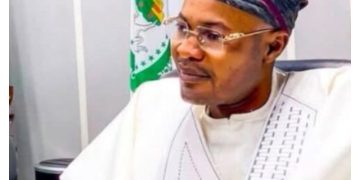
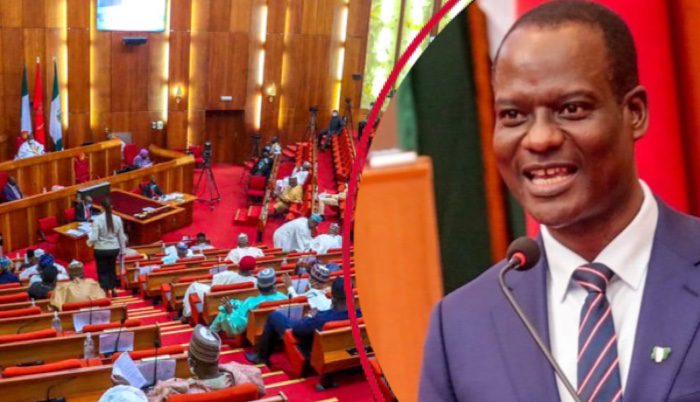
Minister of Finance and Coordinating Minister of the Economy, Taiwo Oyedele, made the clarification while appearing before the Senate Committee on Finance, chaired by Senator Sani Musa (APC, Niger East), during a session on the state of the nation’s economy.
Responding to concerns raised by Senator Adamu Aliero (APC, Kebbi Central) over reports that the Tinubu administration had accumulated about ₦80 trillion in fresh debt in addition to the ₦75 trillion it inherited, Oyedele said the figures being circulated were misleading.
According to him, a significant portion of the increase in Nigeria’s debt stock resulted from the depreciation of the naira, which inflated the naira value of the country’s foreign-denominated debt.
“When this administration came into office, public debt was around ₦75 trillion. Many people simply compare that figure with today’s debt stock and conclude that this government has borrowed massively.
“However, it is important to note that, following the reforms and the depreciation of the naira, the foreign currency component of our public debt had to be revalued because Nigeria reports its debt in naira. That accounting adjustment alone added more than ₦40 trillion to the public debt figure.
“Another important factor is the securitisation of the Ways and Means advances from the previous administration, which the National Assembly approved. About ₦33 trillion was added to the public debt through that process. It was not new borrowing; it was simply bringing previously existing obligations onto the official debt books.
“These factors have not always been properly explained, which is why the reported public debt appears much larger.
“The actual amount this administration has borrowed is nowhere near what many people believe. Even for domestic borrowing, much of it is refinancing. Debt that was borrowed previously matures, and the government raises new debt to refinance it. That is not new borrowing,” he said.
The minister maintained that the Tinubu administration had exercised restraint in contracting loans, stressing that borrowings were targeted at infrastructure development rather than recurrent expenditure.
“This administration has been very responsible in its borrowing. We understand the concerns of Nigerians and of the distinguished senators, but we remain fully committed to debt sustainability.
“We see debt as leverage. Every naira and every dollar borrowed should generate more value than the amount borrowed,” Oyedele added.
However, the minister faced sharp criticism from some lawmakers over the slow implementation of the capital component of the 2026 budget.
Senate Chief Whip, Senator Tahir Monguno (APC, Borno North), and Senator Aliero questioned the pace of capital project execution, with Monguno warning that failure to implement the budget’s capital provisions could amount to an impeachable offence.
Committee Chairman, Senator Sani Musa, intervened, assuring his colleagues that implementation of the capital projects would soon gather momentum.
Following a closed-door session with the minister and members of the government’s economic team, Musa said discussions focused on strengthening budget implementation and improving revenue management.
He disclosed that the committee was considering a shift from the existing envelope budgeting system to a performance- and priority-based budgeting framework, while also exploring a return to the previous payment model for contractors to enhance project execution.